

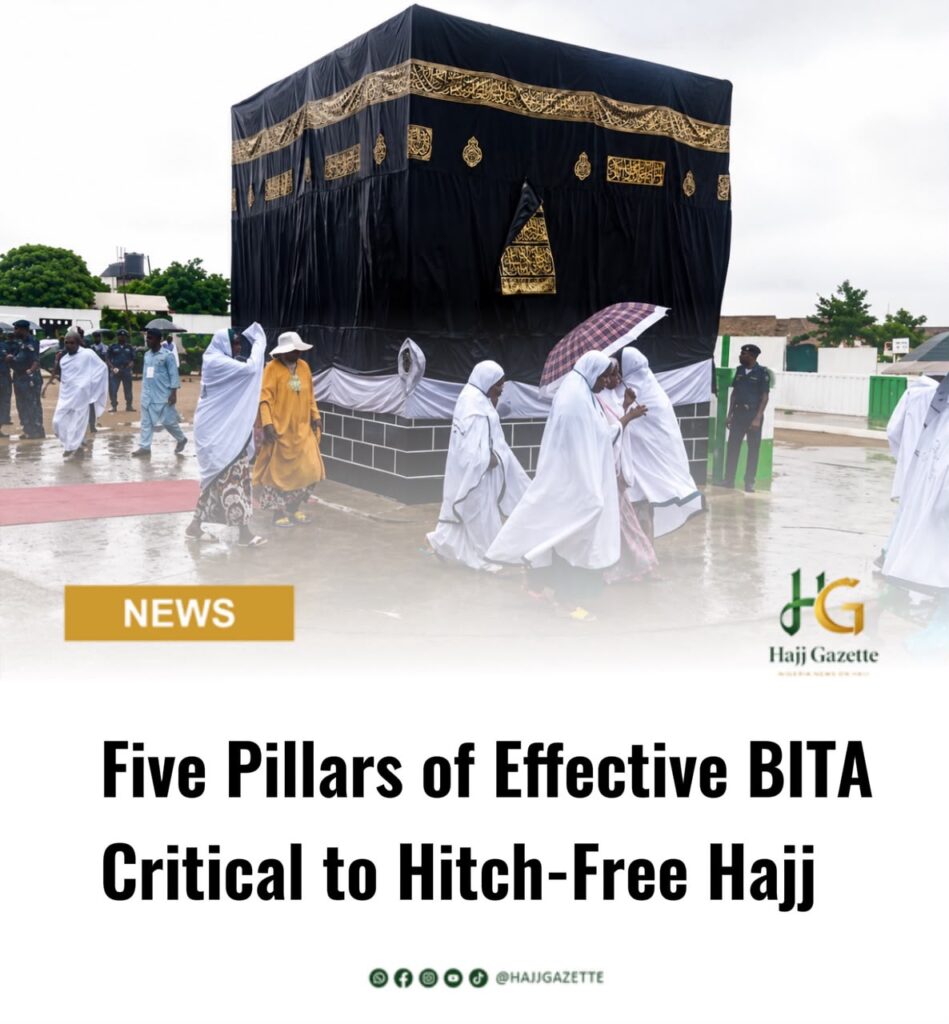
Five Pillars of Effective BITA Critical to Hitch-Free Hajj
By Abdulrazaq Auwal
A comprehensive Enlightenment and Orientation program, popularly called BITA in Nigeria, remains the cornerstone of a successful and hitch-free Hajj operation, as experts urge Hajj administrators to adopt practical, technology-driven and decentralized training models for intending pilgrims.
With Hajj demanding physical endurance, spiritual commitment and compliance with Saudi Arabia’s strict legal and digital systems, experts say traditional lecture-based orientation is no longer sufficient.
They recommend that every BITA program begin with practical simulations of Hajj rites. State Muslim Pilgrims Welfare Boards are encouraged to construct replicas of the Kaaba and Jamarat to allow pilgrims rehearse Tawaf and Ramy before departure.
Pocket-sized guides outlining activities from the 8th to the 13th of Dhul-Hijjah, alongside lessons on concessions for illness or accidental violations of Ihram, should also form part of the curriculum.
Legal and cultural orientation is identified as another essential pillar. Pilgrims should receive detailed guidance on Saudi laws, including the prohibition of narcotics, tramadol and kola nuts, while learning proper immigration procedures, biometric screening requirements and respectful conduct during their stay.
Five Pillars of Effective BITA Critical to Hitch-Free Hajj
Experts also stress the importance of digital literacy. Since access to several Hajj services now depends on electronic platforms, pilgrims must receive hands-on training on the Nusuk App, digital Hajj identity, smart cards and electronic wristbands before travelling.
Health and logistics preparedness equally deserve priority. Orientation sessions should include endurance walks, hydration techniques, heatstroke prevention, crowd management and practical demonstrations on luggage weight limits, tagging and handling.
To improve participation and understanding, experts advocate decentralizing BITA into local government areas instead of organizing overcrowded state-level gatherings.
They further recommend a three-phase schedule covering spiritual preparation, health screening and practical simulations, followed by final airport and departure briefings.
They also call for instructional materials to be translated into local languages, including Hausa, Yoruba and Fulfulde, ensuring every pilgrim receives clear guidance before embarking on the sacred journey.