

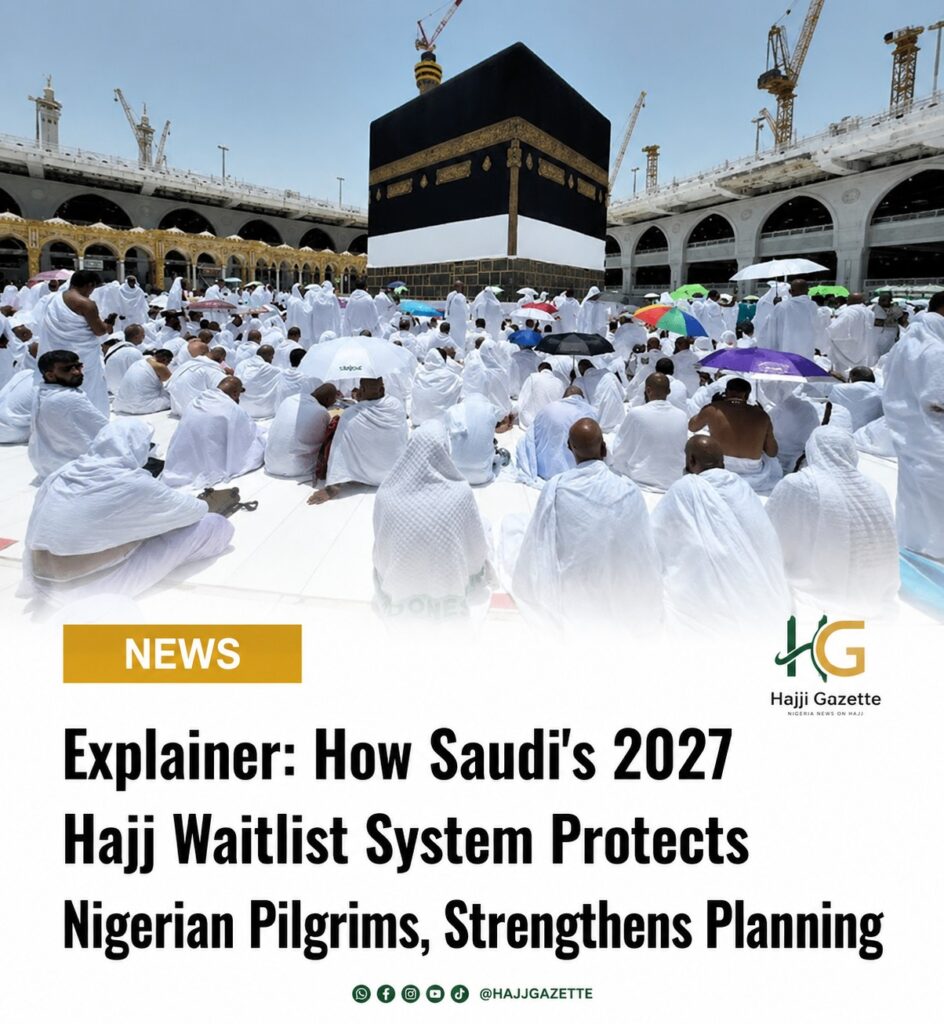
Explainer: How Saudi’s 2027 Hajj Waitlist System Protects Nigerian Pilgrims, Strengthens Planning
By Abdulrazaq Auwal
The Saudi Ministry of Hajj and Umrah has introduced a structured waiting list system for Hajj 2027 that could significantly improve how Nigeria manages pilgrim registration, quota allocation and travel planning.
he new framework will help the National Hajj Commission of Nigeria (NAHCON), State Muslim Pilgrims Welfare Boards, licensed tour operators, and intending pilgrims by promoting transparency, improving financial efficiency, and strengthening logistics.
One of the system’s biggest advantages is its ability to cushion the impact of quota adjustments. In previous Hajj seasons, unexpected changes to national allocations forced some Nigerian states to remove fully paid pilgrims after available slots were exhausted.
Under the new arrangement, intending pilgrims who miss the initial allocation remain on an official waiting list, allowing NAHCON to fill vacancies transparently whenever confirmed pilgrims withdraw or fail to complete the registration process.
Explainer: How Saudi’s 2027 Hajj Waitlist System Protects Nigerian Pilgrims, Strengthens Planning
The waiting list also reduces financial losses. Saudi Arabia’s integrated Nusuk Hajj platform immediately identifies reserved slots that pilgrims leave unused after failing to complete their payments.
Instead of allowing those allocations to lapse, NAHCON can promptly replace them with eligible pilgrims from the waiting list.
The automated system also facilitates the refund or reallocation of unused funds, improving financial accountability.
The policy further encourages early registration and payment. Saudi authorities have fixed September 25, 2026, as the deadline for Hajj 2027 registration and payments, prompting several Nigerian states to begin collecting initial deposits well ahead of schedule.
Early registration enables intending pilgrims to spread payments over time while reducing their exposure to exchange-rate fluctuations, late booking charges and other unexpected cost increases.
The system also strengthens operational planning. With confirmed pilgrim numbers available earlier, NAHCON can complete the issuance of both digital and physical Nusuk cards before departure, reducing delays at airports in Saudi Arabia.
Accurate passenger data will also support flight planning under the Nigeria-Saudi 50/50 Bilateral Air Service Agreement, enabling authorities to allocate pilgrims efficiently between Nigerian and Saudi airlines and deliver a more coordinated Hajj operation in 2027.