

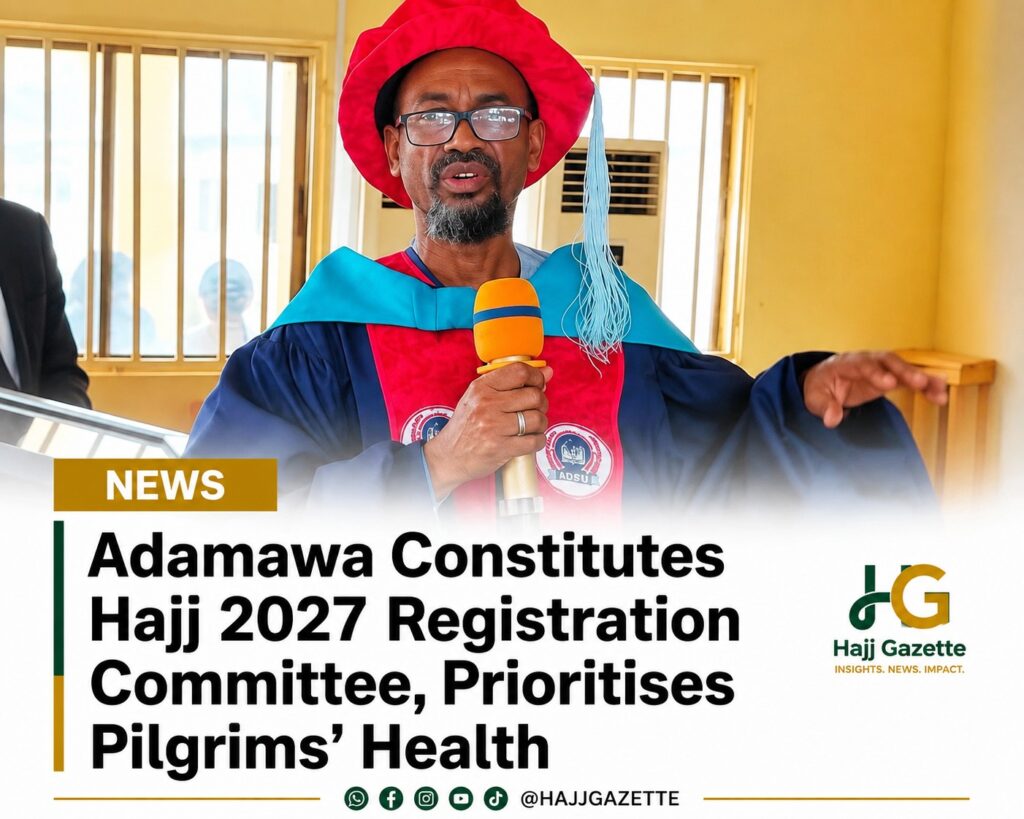
Adamawa Constitutes Hajj 2027 Registration Committee, Prioritises Pilgrims’ Health
By Abdulrazaq Auwal
The Acting Executive Chairman of the Adamawa State Muslim Pilgrims Welfare Commission, Malam Abubakar Salihu, has constituted a registration committee for the 2027 Hajj with a strong focus on the physical fitness and health status of intending pilgrims.
The committee’s terms of reference include the physical verification of intending pilgrims and comprehensive assessment of their health conditions before they embark on the sacred journey.
The initiative, announced as part of preparations for the 2027 pilgrimage, underscores the commission’s commitment to prioritising pilgrim welfare and preventing avoidable medical emergencies during Hajj.
Hajj requires significant physical endurance, particularly because pilgrims may face extreme temperatures, large crowds, prolonged walking and other demanding activities throughout the pilgrimage.
The commission therefore considers early health and fitness assessment essential to ensuring that pilgrims are adequately prepared for the journey.
The move also seeks to prevent situations where strong religious devotion could lead intending pilgrims to disregard physical limitations and embark on the pilgrimage despite health conditions that may expose them to serious risks.
Adamawa Constitutes Hajj 2027 Registration Committee, Prioritises Pilgrims’ Health
By introducing the verification and assessment process early, the commission is shifting its approach from responding to medical emergencies to preventing them through proper screening and preparation.
The initiative is expected to provide greater assurance to pilgrims and their families while helping the state identify individuals who may require medical attention or additional guidance before departure.
The committee will consequently play a critical role in ensuring that those cleared for the 2027 Hajj are not only spiritually prepared but also physically capable of undertaking the demanding pilgrimage.
The development reflects a broader emphasis on responsible pilgrimage management, where safeguarding pilgrims’ lives and wellbeing remains central to preparations.
According to Public Affairs Analyst Barkindo Abdullahi Yakubu, who writes from Malkohi, Adamawa State, the initiative demonstrates thoughtful leadership and reinforces the principle that protecting pilgrims’ health is integral to safeguarding the sanctity of their religious journey.