

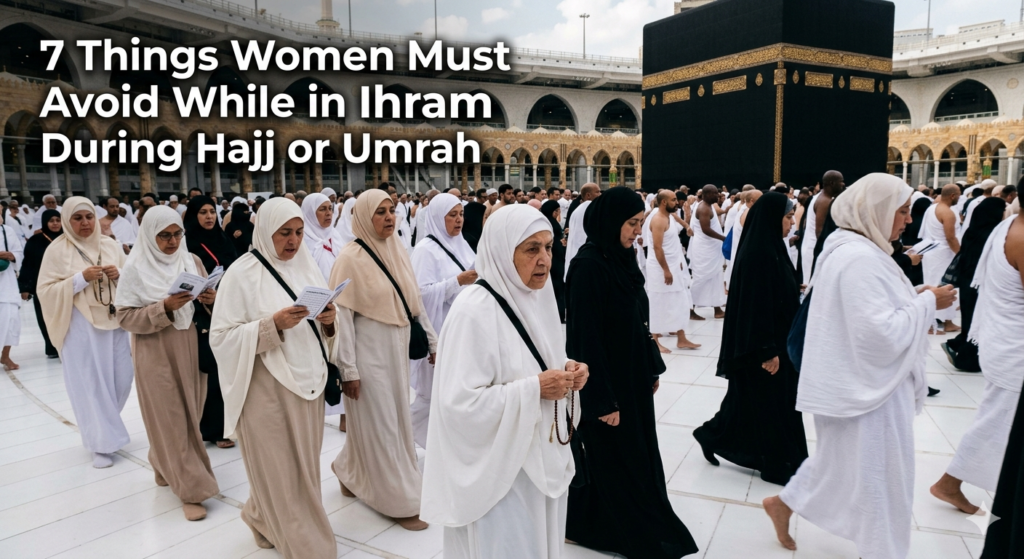
7 Things Women Must Avoid While in Ihram During Hajj or Umrah
7 Things Women Must Avoid While in Ihram During Hajj or Umrah
By Abdulrazaq Auwal
As Muslims from across the world prepare for the sacred journey of Hajj while the Umrah season already in its final phase ahead of the annual Hajj pilgrimage, understanding the rules governing the state of Ihram remains essential for every pilgrim.
While men are widely recognized by their distinctive two-piece white garment, the regulations for women in Ihram are often less discussed, leading to confusion among first-time pilgrims.
Islamic scholars explain that although women are not required to wear a specific Ihram garment, they must still observe a number of restrictions once they enter the sacred state.
These guidelines are intended to maintain modesty, discipline, and spiritual focus during the pilgrimage.
Based on guidance from Islamic scholars, Hajj Gazette highlights seven important things women must avoid while in the state of Ihram.
Wearing Perfume or Fragranced Products: Women in Ihram are not permitted to apply perfume or use scented products on their bodies or clothing.
This includes perfumes, fragranced lotions, deodorants, and strongly scented soaps.
However, scholars clarify that perfume applied before entering Ihram is permissible provided it is not reapplied afterward.
Cutting Hair: A woman in Ihram must not cut, trim, or remove her hair until the completion of the pilgrimage rites. Hair cutting is only allowed at the end of Umrah or after completing the major rites of Hajj.
Trimming Nails: Cutting fingernails or toenails is also prohibited during Ihram. Pilgrims are encouraged to trim their nails before entering the state of Ihram to avoid inconvenience during the pilgrimage.
Wearing the Niqab: One of the most frequently misunderstood rules concerns face covering. Scholars widely hold that a woman in Ihram should not wear a niqab, which is a stitched face veil specifically designed to cover the face.
READ ALSO: https://hajjgazette.com/who-must-perform-hajj-who-should-not-and-why/
If necessary, particularly in crowded areas, a woman may lower part of her head covering over her face without wearing a sewn veil.
Wearing Gloves: Women in Ihram are also advised not to wear gloves. The hands should remain uncovered during the sacred state, similar to the ruling regarding the face.
Engaging in Marital Intimacy: Marital relations and any acts leading to them are strictly prohibited while a pilgrim remains in the state of Ihram. Violating this rule can invalidate the pilgrimage and may require religious compensation.
Conducting or Entering a Marriage Contract: Islamic law also prohibits conducting, arranging, or participating in a marriage contract while in Ihram. This restriction applies equally to men and women.
Maintaining the Spirit of the Pilgrimage
Scholars emphasize that the restrictions of Ihram are designed to foster humility, discipline, and devotion.
For women, the rules are generally fewer compared to those governing men, and they retain flexibility in their clothing as long as it remains modest and appropriate.
Each year, millions of Muslims gather in Makkah to perform the sacred rites at Masjid al-Haram, making proper knowledge of Ihram regulations crucial for a smooth and spiritually fulfilling pilgrimage.
Religious scholars therefore advise intending pilgrims to familiarize themselves with these guidelines before embarking on the journey to ensure their acts of worship are performed correctly and accepted.
7 Things Women Must Avoid While in Ihram During Hajj or Umrah
7 Things Women Must Avoid While in Ihram During Hajj or Umrah

