

Why Executive Secretaries Should Stay with Their Pilgrims in Makkah
By Iliyasu Abdlmumini
There is a simple question every Executive Secretary of a State Pilgrims Welfare Board should ask before leaving Nigeria for Hajj: If I am confident about the accommodation I have secured for my pilgrims, why should I not stay there with them?
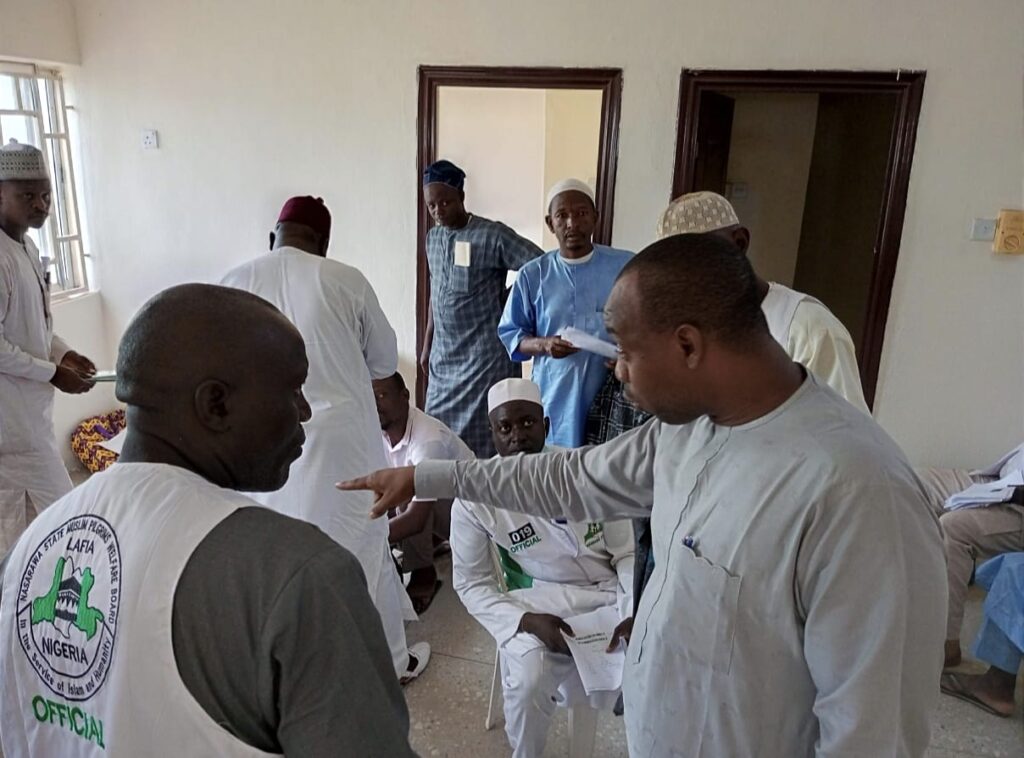
For us in Nasarawa State, this was the approach throughout the 2026 Hajj. Our Executive Secretary, Mallam Idris Ahmad Al-Makura, stayed in the accommodation arranged for the pilgrims.
He did not choose a more comfortable hotel or relocate to an area closer to the Haram simply for his personal convenience. Instead, he remained with the people whose welfare he was responsible for.
I was therefore not surprised when Nasarawa State was recognised as the best state in pilgrims’ accommodation and welfare services during the 2026 Hajj.
The award was welcome recognition, but for those of us who closely observed the operation, it did not come as a complete surprise.
We saw an Executive Secretary who managed from within the pilgrims’ environment rather than from a comfortable distance.
With registration for the 2027 Hajj now underway, states will soon begin finalising accommodation, feeding, transportation and other contractual arrangements. This presents an opportunity for State Pilgrims Welfare Boards to reconsider an important aspect of leadership: should Executive Secretaries stay in the same accommodation they provide for their pilgrims?
I believe they should, except where genuine operational responsibilities make separate accommodation necessary.
There have been concerns about situations where pilgrims are accommodated in difficult locations while senior officials responsible for their welfare stay elsewhere, sometimes in hotels closer to the Haram and considerably more comfortable than those occupied by the pilgrims.
Why Executive Secretaries Should Stay with Their Pilgrims in Makkah
There can be legitimate reasons for some officials to stay separately. An officer assigned to a central medical facility, emergency response centre or another critical operational point may need to remain close to that location.
But where no such operational necessity exists, the Executive Secretary should stay with the pilgrims.
Leadership Must Be Visible
An Executive Secretary who stays with his pilgrims sees their conditions firsthand. He sees the accommodation, inspects the rooms, observes the feeding arrangements and understands the quality of the services being delivered.
He knows when supplies arrive and can intervene immediately when something goes wrong. He sees the lifts, sanitation facilities and common areas. He experiences the distance to the Haram and understands what that distance means for pilgrims, people with mobility difficulties and those with health challenges.
Receiving a report that there is a problem with room allocation is not the same as walking into the room and seeing the problem personally.
The same applies to transportation. An Executive Secretary who travels with his pilgrims understands the challenges of moving them to the Mashair and bringing them back after the Hajj. When buses arrive late or fail to show up, he does not need to wait for a report before understanding the consequences.
Accessibility Builds Pilgrims’ Confidence
Perhaps more importantly, pilgrims can reach their Executive Secretary more easily when he stays in the same accommodation.
Hajj can be overwhelming, particularly for first-time pilgrims. Some pilgrims may become lost or fall ill. Others may need urgent assistance with accommodation, feeding, transportation or movement arrangements.
When the Executive Secretary stays in the same building, pilgrims know where to find him. That physical presence creates confidence. They know that the person ultimately responsible for their welfare is not far away.
Staying among pilgrims also exposes an Executive Secretary to problems that may never appear in formal reports.
A brief conversation in a lift, at breakfast or in a corridor can reveal a problem requiring immediate attention. A pilgrim may mention an inconvenience that officials have overlooked, while a group leader may raise an issue before it develops into a larger crisis.
These seemingly minor encounters can provide valuable intelligence that no briefing document can fully capture.
Presence Improves Accountability
The presence of the Executive Secretary can also keep the entire welfare structure more responsive.
Welfare officers know that their principal is nearby. Service providers understand that their work can be inspected at any time. Transport officials know that delays will be noticed. Feeding contractors know that the person who approved the arrangement could also be eating the food. That creates a stronger culture of accountability.
It sends a clear message: the welfare of pilgrims is not merely an administrative responsibility; it is a personal leadership responsibility. But perhaps the greatest benefit is empathy.
When an official shares the same environment with the people under his care, their challenges stop being abstract issues contained in reports. He sees pilgrims struggling with distance. He sees tired pilgrims returning after a long day. He hears their concerns and witnesses their experiences. That experience can influence better decisions.
Would You Stay Where You Put Your Pilgrims?
This is why every Executive Secretary should assess the accommodation secured for pilgrims from a personal perspective.
If it is safe, clean, accessible and comfortable enough for the pilgrims, it should be good enough for the official responsible for their welfare.
If it is far from the Haram, the Executive Secretary should understand what that distance means.
If the feeding is inadequate, he should know. If the rooms are overcrowded, he should see it. If transportation is inconvenient, he should experience it.
This is not about denying officials reasonable comfort. It is about ensuring that the people making decisions about pilgrims’ welfare understand the consequences of those decisions.
The Nasarawa experience demonstrated the value of this approach. Mallam Al-Makura stayed with the pilgrims, remained accessible and directed officials to respond quickly to emerging challenges. That proximity contributed to the calm and orderly experience of Nasarawa pilgrims throughout the 2026 Hajj.
When the National Hajj Commission of Nigeria (NAHCON) subsequently recognised Nasarawa State as the best state in pilgrims’ accommodation and welfare services for the 2026 Hajj, it was a proud moment for the state.
For us, however, the recognition also reinforced a broader lesson: Hajj welfare administration works better when leadership stays close to the people.
A Simple Reform for the 2027 Hajj
Other states can adopt this practice. It does not require a new government structure or a huge budget. It requires a change in leadership culture.
As states prepare for the 2027 Hajj, Executive Secretaries should consider staying in the accommodation they have secured for their pilgrims, where operational circumstances permit.
They should see what their pilgrims see, experience what they experience and listen to what they say.
Pilgrims entrust their money, welfare and an important part of their spiritual journey to those appointed to serve them. They deserve leaders who are close enough to understand their needs and willing to experience the conditions created by their own decisions.
When the person making a decision is willing to live with its consequences, the quality of that decision is more likely to improve.
And when an Executive Secretary chooses to stay among his pilgrims, he sends a powerful message: their welfare will not be managed from a comfortable distance.
Iliyasu Abdlmumini, 2026 Nasarawa Pilgrim