

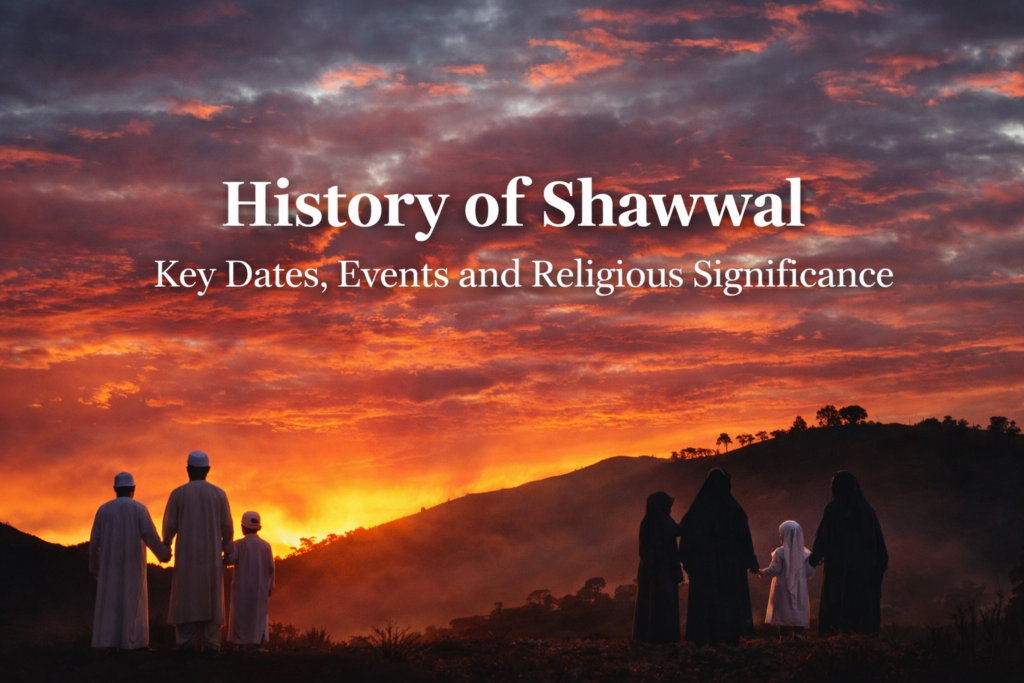
Shawwal: Important Dates, Events, Religious Significance
By Abdulrazaq Auwal
Shawwal, the 10th month of the Islamic lunar calendar, holds deep historical and spiritual significance for Muslims worldwide.
It immediately follows Ramadan and begins with the celebration of Eid al-Fitr on the 1st day, marking the conclusion of a month-long period of fasting, prayer and reflection.
The name “Shawwal” is derived from the Arabic root “shala,” which historically referred to the period when female camels became pregnant.
In pre-Islamic Arabia, the month was associated with superstition, as marriages conducted during Shawwal were believed to be unsuccessful.
However, Islamic teachings later dispelled this notion, establishing the month as one of normal social and religious life.
Several notable historical events are linked to Shawwal. Among them is the Battle of Uhud, which occurred on the 7th of Shawwal in the third year after Hijrah.
The battle remains a significant moment in early Islamic history, highlighting the challenges faced by the early Muslim community.
Additionally, the 13th of Shawwal marks the birth of Imam Bukhari, one of Islam’s most revered scholars known for compiling authentic traditions (Hadiths) of the Prophet Muhammad (peace be upon him).
Another important remembrance often associated with this period is the martyrdom of Ja’far al-Sadiq, a prominent figure in Islamic scholarship.
READ ALSO: https://hajjgazette.com/saudi-authorities-release-report-on-2026-ramadan-umrah-operations/
Beyond its historical context, Shawwal carries continued spiritual importance through voluntary acts of worship.
Muslims are encouraged to observe six days of fasting during the month, beginning after Eid al-Fitr, as fasting on the festival day itself is prohibited.
According to Islamic teachings, combining the Ramadan fast with six additional days in Shawwal is considered equivalent in reward to fasting throughout the year.
Scholarly opinions vary regarding the observance of these fasts. While many Sunni scholars recommend observing the six days consecutively, others permit flexibility.
Across different Islamic schools of thought, the emphasis remains on the spiritual merit rather than strict sequence.
In essence, Shawwal represents both continuity and renewal, bridging the intense devotion of Ramadan with a return to everyday life, while offering believers further opportunities for spiritual growth and reflection.