

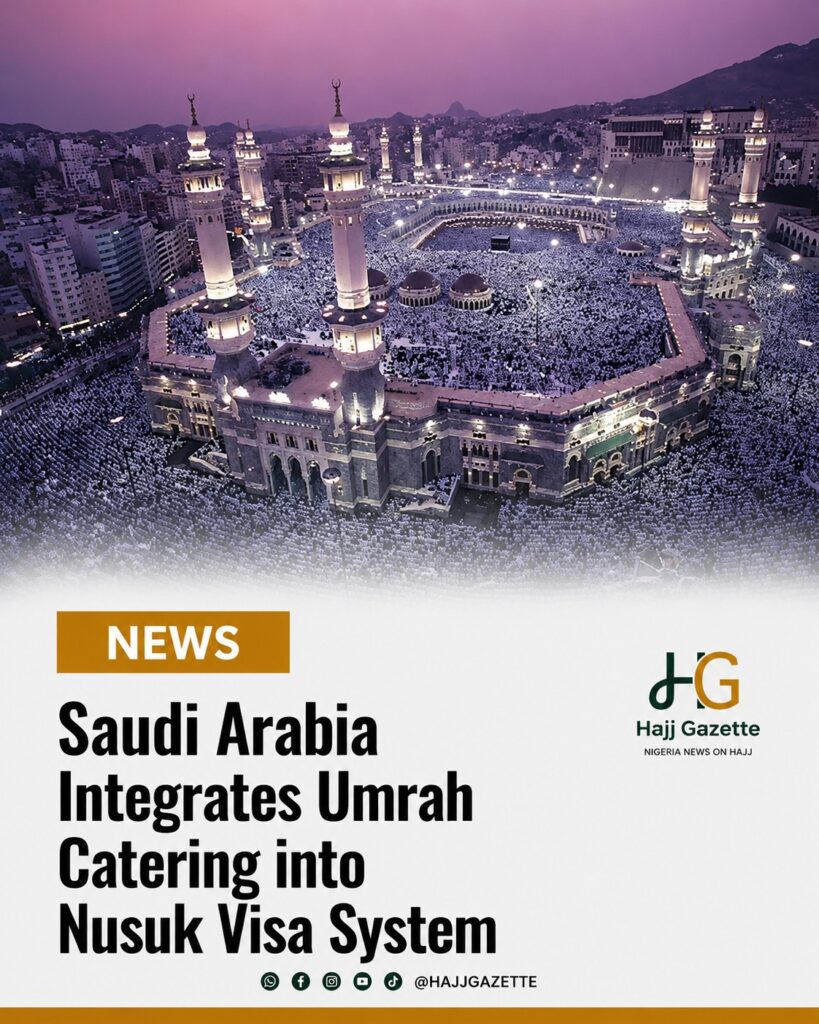
Saudi Arabia Integrates Umrah Catering into Nusuk Visa System
By Abdulrazaq Auwal
Saudi Arabia has introduced a new digital catering policy for Umrah pilgrims, requiring travel agencies to register licensed food service providers on the Nusuk Masar platform before completing pilgrim bookings, a move aimed at strengthening service quality and eliminating unregistered operators.
Under the new framework, Saudi Arabia integrates catering into the Umrah visa process and is expected to add meal charges directly to visa fees, following the same model it already uses for mandatory transport services.
Industry sources estimate the catering component at approximately 20 Saudi Riyals per pilgrim per day, although the Ministry of Hajj and Umrah has yet to officially confirm the pricing.
The policy requires every Umrah package to include a registered Food BRN (Business Registration Number) catering contract.
Nusuk Masar will verify each contract in real time against municipal licensing and health records, preventing agencies from processing packages with unlicensed or non-compliant caterers.
As part of the initiative, Saudi Arabia is connecting more than 10,000 restaurants to the Nusuk ecosystem.
Saudi Arabia Integrates Umrah Catering into Nusuk Visa System
The system assigns each pilgrim an individual meal BRN code and links it to the visa before issuance, while requiring agencies to upload approved menus to the platform before completing bookings.
The first phase of implementation will apply to pilgrims from Pakistan, India, Bangladesh and Egypt, beginning on the first of Rabi al-Awwal, with additional countries expected to join in subsequent phases.
The reform significantly alters Umrah package administration by integrating pricing, catering verification and visa generation into a single digital workflow.
Agencies that fail to register approved catering contracts or update package pricing risk delays or outright rejection of bookings.
Industry observers expect the new policy to increase overall Umrah package costs, particularly for longer stays, as catering shifts from a negotiable service to a mandatory, itemized visa component.
The initiative also reflects Saudi Arabia’s broader strategy of digitizing pilgrimage services through Nusuk while improving transparency, food safety and regulatory compliance across the Umrah sector.