

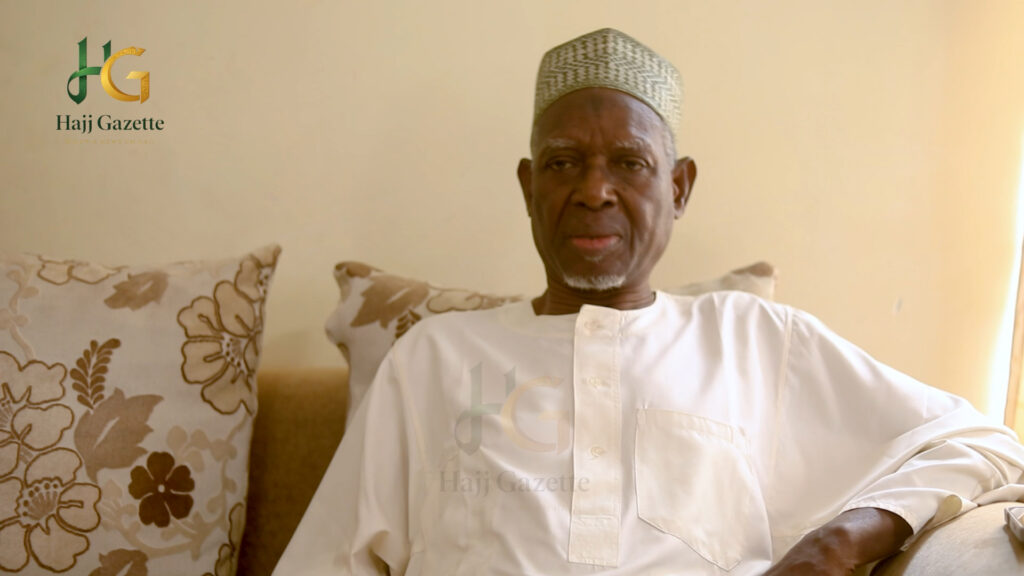
Reform in Hajj Operations Blocked by Self-Interest, Says Hajj Advocate Kabiru Hanga
By Abdulrazaq Auwal
A Public Servant and Hajj and Education Advocate, Malam Kabiru Sani Hanga, has traced the roots of government participation in Hajj operations to the early 1960s, stressing that the original objective was to ease the burden on Nigerian pilgrims.
In an exclusive interview with Hajj Gazette, Hanga recalled that the late Ahmadu Bello, the Sardauna of Sokoto, consistently passed through Saudi Arabia for Hajj or Umrah during official trips abroad.
According to him, the Sardauna’s firsthand understanding of pilgrims’ challenges informed his advice to the Federal Government to formally facilitate Hajj travel.
Following that intervention, government support expanded to include visa processing, air ticket arrangements, vaccinations and reception services in Saudi Arabia.
Over time, Hajj administration evolved into a fully institutionalised government responsibility, now overseen by the National Hajj Commission of Nigeria (NAHCON), which coordinates airlift and logistical arrangements for pilgrims nationwide.
Despite this structured framework, Hanga argued that recurring operational challenges persist not due to a lack of solutions, but because of weak implementation.
Drawing from his seven-year experience at the Kano State Pilgrims Office, he alleged that some officials engage in Hajj operations primarily for material benefits rather than service delivery.
He maintained that for certain actors, pilgrimage administration becomes secondary to estacode and other financial incentives. According to him, when personal gain takes precedence, accountability diminishes, undermining the spiritual essence and administrative integrity of Hajj management.
Hanga further noted that comprehensive reports are produced annually at both federal and state levels, clearly outlining operational gaps and practical recommendations.
However, he claimed that implementation is often resisted because reforms could curtail personal advantages enjoyed within the system.
He added that the persistence of challenges in Hajj administration reflects a deliberate reluctance to disrupt entrenched interests, asserting that meaningful reform requires decisive action and a renewed commitment to service over self-interest.
“No problem with Hajj, which has no known solution, we have the solutions, but we refuse to solve them. The problems persist so that we can take
advantage of it and we can continue to benefit from the confused situation we create deliberately,” Hanga stated.