

Hajj Costs: Expert Urges Muslims to Explore Alternative Travel Options
By Abdulrazaq Auwal
Over the past two decades, the cost of Hajj for Nigerian pilgrims has witnessed a steady and significant increase. From figures below N1 million in the early 2000s, fares have climbed progressively due to currency depreciation, aviation charges, accommodation costs in Makkah and Madinah, and service fees denominated largely in foreign currency.
In recent years, Hajj packages for Nigerian pilgrims have surged to between N8 million and N9 million, placing the pilgrimage beyond the financial reach of many intending Muslims.
The rising cost has repeatedly triggered public concern, particularly among low- and middle-income earners who view Hajj not as luxury travel but as a compulsory religious obligation.
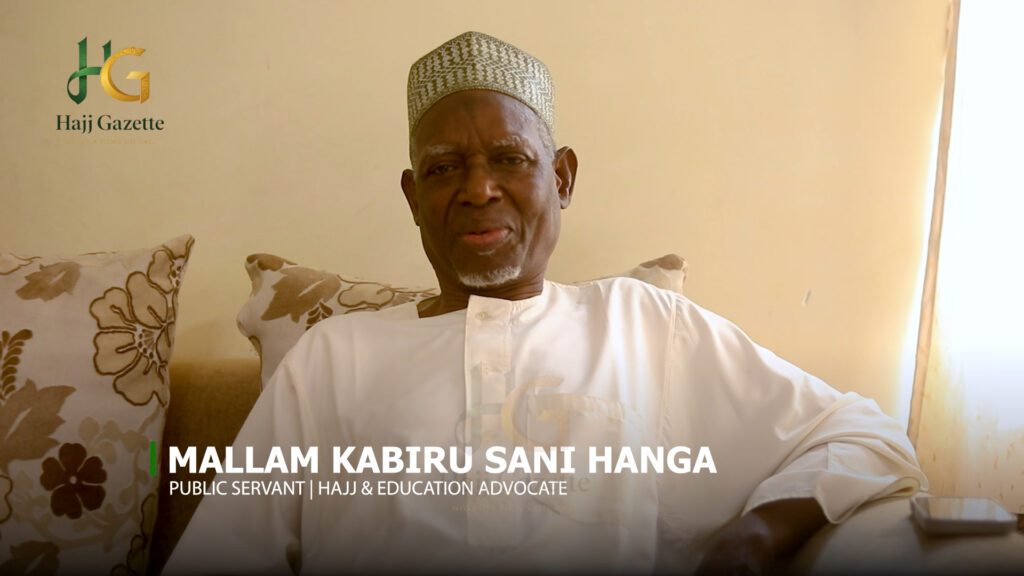
Against this backdrop, a Public Servant and Hajj and Education Advocate, Malam Kabiru Sani Hanga, has called for a rethink of how Nigerians approach travel to Saudi Arabia for the pilgrimage.
Speaking in an exclusive interview with Hajj Gazette, Hanga urged Muslims to reconsider the growing assumption that air travel is the only viable means of performing Hajj.
He argued that narrowing the pilgrimage to aviation-based logistics has contributed to escalating costs and limited access.
“Hajj is one of the five pillars of Islam,” he said, emphasizing that it is obligatory for every Muslim who possesses the means. He clarified that “means” extend beyond financial capability to include good health, freedom, knowledge, and the overall capacity to undertake the journey.

Tracing the historical evolution of Hajj from West Africa, Hanga noted that for over a thousand years, long before the creation of modern Nigeria, Muslims from the region traveled to Makkah by foot.
He referenced a Qur’anic verse indicating that pilgrims would come walking or riding animals, underscoring that the obligation was never restricted to a specific mode of transport.
He explained that early pilgrims endured extreme hardship, traversing thousands of kilometers through forests, deserts, rivers, and hostile territories plagued by robbers and slave raiders.
Despite the dangers and lengthy travel time, they remained committed to fulfilling the religious duty.
With technological advancement came new travel methods. Historical records show that in the late 1920s, the Emir of Katsina pioneered Hajj travel by truck, passing through Kano and joined by prominent businessman Alhaji Ibrahim Ringim. The Emir of Kano, Abdullahi Bayero.
He later undertook a similar road journey with a large entourage, deploying multiple vehicles including support trucks carrying fuel, mechanics, and provisions.
Commercial Hajj by road later emerged under Alhaji Muhammadu Gwadabe, who organized paid transport services for intending pilgrims. Sea travel also featured prominently, with Alhaji Hassan Bayero traveling by rail to Lagos before sailing through London and the Mediterranean Sea to Jeddah.
According to Hanga, air travel eventually gained prominence in the early 1970s, pioneered in Kano by Alhaji Mahmoud Bayero and other private operators.
Hanga expressed concern that contemporary discourse has narrowed Hajj logistics exclusively to air transport. “Islam does not restrict Hajj to air travel,” he stated, stressing that road, sea, rail, and even trekking remain religiously valid options where feasible.
He argued that presenting air travel as the only option has heightened the financial barrier, particularly as fares now approach N9 million.
“Hajj is not tourism or luxury; it is a compulsory act of worship,” he said, urging authorities to consider policy reforms that could diversify transport models and reduce costs.
However, his call faces debate within policy and religious circles, especially regarding feasibility in modern times.
Saudi Arabia operates a tightly regulated Hajj entry system under the supervision of the Ministry of Hajj and Umrah, with structured visa quotas and designated arrival channels that are largely aviation-based.
In Nigeria, Hajj operations are coordinated by the National Hajj Commission of Nigeria (NAHCON), which manages airlift arrangements with approved carriers and oversees compliance with Saudi guidelines.
Transitioning to alternative travel systems such as road or sea would require complex multilateral agreements, enhanced security frameworks across transit countries, medical logistics planning, and diplomatic alignment.
Security realities across parts of West, Central, and North Africa could further complicate the viability of overland routes, while the demographic profile of many pilgrims, largely elderly, raises health and safety considerations for prolonged journeys.
Nonetheless, the affordability debate remains central. Analysts note that while large-scale overland Hajj travel may not be immediately practical, Hanga’s intervention underscores a broader need to interrogate cost drivers, foreign exchange exposure, and procurement structures within the current aviation-dependent model.
Drawing from personal family history, Hanga disclosed that his paternal grandfather traveled by road for about six months, while his maternal grandfather performed the pilgrimage entirely on foot and returned the same way.
For him, these examples illustrate that financial constraints linked to air travel should not automatically be seen as an absolute barrier to fulfilling the obligation.
Hanga call for a shift of focus from comfort-based expectations to structural reform. While the theological permissibility of alternative travel is clear, the policy challenge lies in determining whether such alternatives can be operationalized safely, legally, and sustainably in today’s geopolitical environment.