

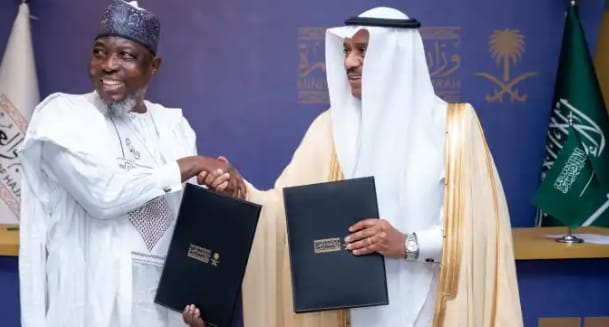
Reforms, Results, Renewal: NAHCON’s Defining Gains from the 2025 to 2026 Hajj
By Mohammed Ibn Moh’d
The National Hajj Commission of Nigeria (NAHCON), under the leadership of Professor Abdullahi Saleh Usman, has within a short operational window delivered measurable improvements that underscore the impact of competence-driven institutional reform.
His tenure signals a decisive break from an era characterised by reactive planning, limited transparency, and persistent operational bottlenecks.
A standout achievement has been the restoration of structure, discipline, and predictability to Hajj planning and execution. Through early and sustained engagement with Saudi authorities, strict adherence to operational timelines, and a proactive planning ethos, NAHCON has significantly reduced the last-minute disruptions that previously defined the exercise.
The downstream impact is evident across critical touchpoints, airlift coordination, accommodation, feeding, and intra-city transportation, areas long criticised by stakeholders and pilgrims alike.
Equally central to this turnaround is a renewed focus on accountability and transparency. Professor Usman’s leadership has tightened internal controls while deepening collaboration with state pilgrims’ welfare boards and licensed private tour operators.
Clearer guidelines, firmer compliance standards, and open communication channels have curtailed discretion-driven practices, improved stakeholder confidence, and delivered greater cost predictability for pilgrims. The outcome is a more orderly system with clearer expectations and improved welfare outcomes.
Health and safety governance has also been elevated. By enforcing strict compliance with Saudi medical protocols and strengthening pre-departure health screening, NAHCON has taken firm, sometimes unpopular, decisions that prioritise pilgrim safety and Nigeria’s international standing.
These interventions reflect a leadership posture focused on long-term credibility rather than short-term expediency.
Beyond operations, NAHCON has been repositioned as a credible actor in international Hajj diplomacy. Improved working relationships with Saudi Hajj authorities and service providers have strengthened Nigeria’s negotiating leverage, translating into better service quality and allocations for Nigerian pilgrims.
This enhanced institutional standing represents a strategic dividend that extends beyond any single Hajj season.
In aggregate, NAHCON’s progress under Professor Abdullahi Usman is not limited to smoother operations; it is rooted in the institutionalisation of systems, standards, and a reform-oriented culture.
While challenges persist, the current trajectory points to a more sustainable, professional, and pilgrim-centred Hajj administration an outcome that warrants both recognition and consolidation.
Notably, the Commission’s Information and Publications Department has been a critical enabler of these gains. Headed by Fatima Sanda Usara, the department has distinguished itself through disciplined messaging, clarity of purpose, and consistency in public engagement.
Her calm yet firm professional approach, particularly during periods of heightened scrutiny, has ensured timely, accurate, and comprehensive communication reinforcing public trust and institutional credibility.
Supporting this effort is Mohammed Musa Danbaba, whose coordination role has streamlined internal information flow and aligned cross-departmental messaging, delivering coherence and precision in NAHCON’s public communications.
The strategic media input of Ahmed Mu’azu, Technical Assistant to the Chairman on Media, has further strengthened this framework by ensuring that the Chairman’s policy direction and institutional priorities are clearly and effectively articulated.
Officers including Suwaiba Ahmad, Sani Shafi’i, and other team members have collectively sustained high standards of professionalism, responsiveness, and teamwork. Together, they have transformed information management at NAHCON into a proactive, coordinated, and disciplined operation an often under-acknowledged but indispensable pillar of the Commission’s recent performance gains.