

Middle East: Hotel Prices in Makkah Drop as International Pilgrims Cancel Bookings
By Abdulrazaq Auwal
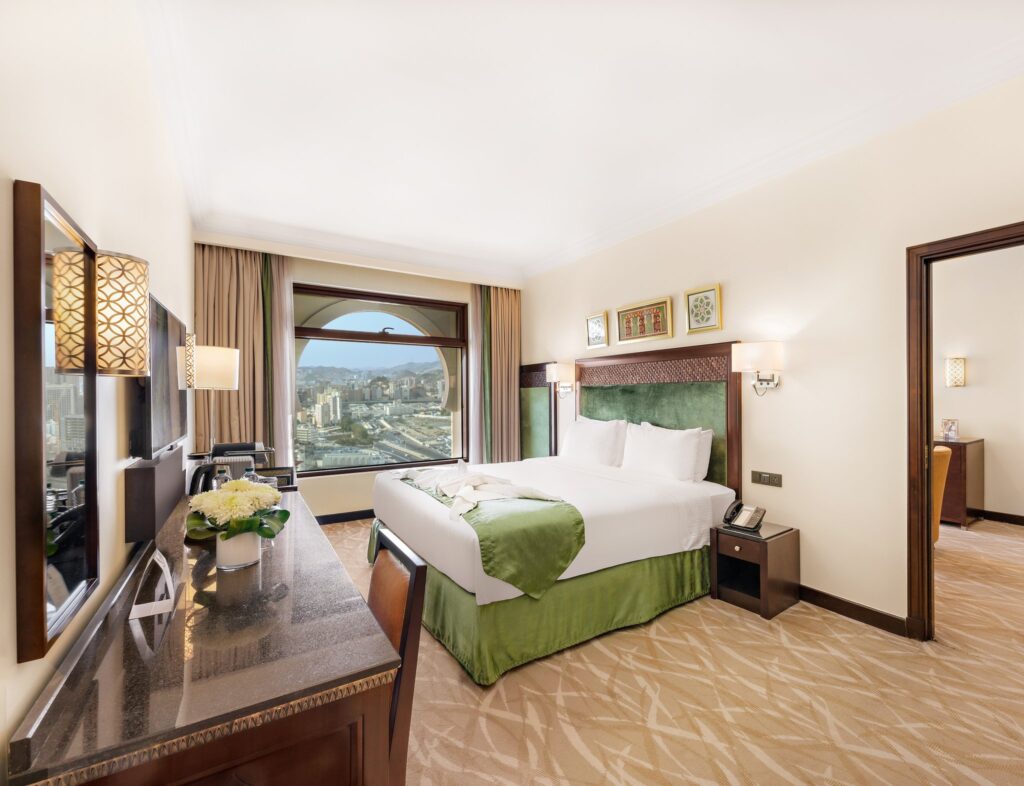
Some hotels in Makkah have reduced room rates by as much as 50 percent during the final 10 days of Ramadan following the cancellation of thousands of international bookings linked to regional tensions that have disrupted flights across parts of the Middle East.
The period is traditionally the busiest season for hotels in the holy city, when millions of worshippers travel to perform Umrah and spend the last nights of Ramadan near the Grand Mosque.
However, aviation disruptions and travel uncertainty have prompted many pilgrims to postpone their journeys, leaving hotels with unexpected vacancies.
The development has created rare opportunities for Saudi citizens, residents and visitors already inside the Kingdom to secure accommodation close to the Haram at prices seldom seen during Ramadan’s peak period.
Hotels that normally sell out months in advance are now accepting last-minute reservations.
READ ALSO: https://hajjgazette.com/breaking-senate-confirms-amb-yusuf-as-nahcon-chairman-ceo/
Kamel Ibrahim, a Makkah resident, said domestic pilgrims are benefiting from the shift, advising those searching for rooms in the central areas of Makkah and Madinah to contact hotels directly rather than relying solely on booking applications.
Price checks on the travel platform Wego revealed that a one-night hotel stay listed online at SR1,138 (about $303) was offered directly by the same hotel for SR1,032 (about $275), highlighting the potential savings available through direct bookings.
Hospitality operators say the sector has seen a notable decline in occupancy compared with previous Ramadan seasons.
Sara Siyamek, front office supervisor at Tilal Jabal Al-Kaabah Hotel, said hotels around the Grand Mosque have experienced a drop in bookings.
According to sector indicators, occupancy rates during the final 10 days of Ramadan have declined by about 30 percent compared with previous years, despite the period typically recording full occupancy.
Travel disruptions affecting several countries have contributed to the slowdown in arrivals.
Wejdan Bugis, a mutawwif appointed by the Ministry of Hajj and Umrah to guide pilgrims, said flight cancellations remain the main obstacle preventing pilgrims from reaching the Kingdom.
She noted that airport operations in parts of the region have been affected, placing additional pressure on flights arriving through King Abdulaziz International Airport, the main gateway for pilgrims traveling to Makkah.
Authorities in Indonesia have urged pilgrims to delay travel due to flight cancellations linked to regional tensions, while reports indicated that around 1,600 pilgrims from Malaysia were stranded in Saudi Arabia following airspace disruptions. In addition, about 150 pilgrims from Maldives were unable to travel for Umrah after transit flights were canceled.
Despite the challenges, analysts say religious travel to Makkah remains resilient. Talat Hafiz, an economist and financial analyst, said airlines and aviation authorities are adjusting routes to maintain safe travel corridors.
Hospitality consultant Abdulmughni Al-Twyri said many pilgrims from Turkey, Pakistan, Uzbekistan and Tajikistan were already in Makkah before the disruptions, helping sustain occupancy in mid-range hotels in districts such as Al-Aziziyah and Kudai.