

Inside Gombe’s 2026 Hajj Preparations Amid Quota Cuts, New Rules
By Abdulrazaq Auwal
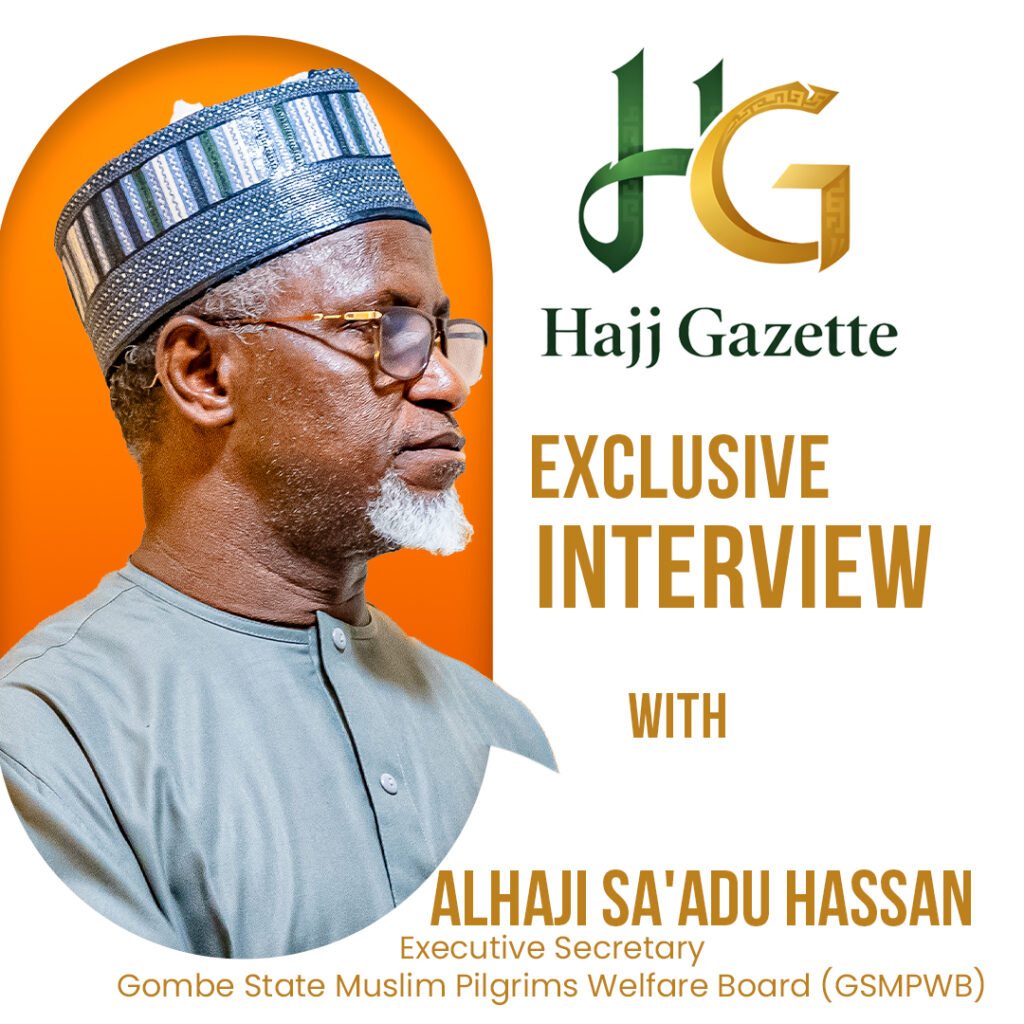
As preparations for the 2026 Hajj gather momentum amid sweeping reforms by Saudi authorities, state pilgrim boards across Nigeria are grappling with reduced quotas, tighter timelines, and heightened operational scrutiny. In this interview, Sa’ad Hassan Adam, Executive Secretary of the Gombe State Muslim Pilgrims Welfare Board, provides a candid assessment of where Gombe stands, the challenges encountered, and the strategic decisions shaping the state’s Hajj operation.
How far has Gombe progressed with preparations for the 2026 Hajj?
Preparations have started well, but it is important to be honest; this year comes with significant operational challenges. These challenges are largely external and systemic, affecting not just Gombe State but Nigeria as a whole. The situation is unfolding within a far more complex context than in previous years. We started early, but the reality is that challenges in this Hajj cycle are unprecedented and largely driven by policy shifts from Saudi Arabia and the resulting downstream effects on Nigeria and the states.
What are the major challenges affecting the 2026 Hajj preparations?
The first major issue is Nigeria’s Hajj quota. Initially, Saudi Arabia allocated 95,000 seats to Nigeria, as has been the tradition. However, due to challenges observed during preparations and concerns about readiness, the allocation was first reduced to 69,600.
When we later went to Saudi Arabia to sign agreements with service providers through the National Hajj Commission of Nigeria (NAHCON), the Saudi authorities expressed disappointment with the low level of pilgrim registration nationwide at that point. As a result, Nigeria was reverted to its previous year’s performance, which stood at about 50,000 pilgrims. That meant a further reduction of about 16,000 seats.
The NAHCON Chairman objected to this reduction and insisted that Nigeria should be allowed to retain the higher figure. After deliberations, Saudi authorities agreed to give Nigeria another opportunity, saying that if the country performed well and met targets, the additional slots would be restored. As of now, Nigeria’s final allocation remains uncertain.
How did NAHCON respond to this uncertainty, particularly for the states?
The commission advised states to focus on performance. States were told to register as many pilgrims as they could realistically manage. However, performance is not just about numbers; it must align with accommodation and logistics capacity. This approach placed greater responsibility on states to be prudent and realistic.
How did Gombe State respond to the directive?
We took a very cautious and responsible approach. Accommodation contracts in Saudi Arabia are binding. You cannot tell a service provider you have 20,000 pilgrims when you realistically have only 10,000. If you default, the financial burden falls on the state.
Last year, Gombe State had accommodation for 960 pilgrims. Given the uncertainty in registrations and payments, we insisted on maintaining that same capacity for 2026. It was a deliberate decision to avoid financial exposure and contractual liabilities.
What was the registration situation at the early stage?
Frankly, it was discouraging. Before we travelled to Saudi Arabia, fewer than 100 people had even indicated interest, and most had not completed payment. These developments raised a serious concern about the number we were supposed to negotiate accommodation for.
What do the Board and the State Government say about these challenges?
Before departing for Saudi Arabia, I briefed His Excellency, Governor Muhammadu Inuwa Yahaya, on the situation. I explained the dilemma clearly: we were expected to meet NAHCON’s deadlines in Saudi Arabia without certainty over pilgrim numbers. His Excellency listened attentively and asked a critical question: what solution do you propose?
I humbly suggested that the state consider providing temporary financial backing, essentially a bridge facility, to enable us to secure accommodation and feeding contracts within the stipulated timeframe. Without that intervention, Gombe risked missing out entirely, regardless of later improvements in registration.
Did the state government intervene at that point?
Yes, and very decisively. The governor understood the urgency and the risk and responded positively by releasing N5 billion to enable us to settle accommodation commitments or at least make a substantial advance to NAHCON. This intervention stabilised our preparations and even inspired other states to adopt similar measures. We agreed that once registrations improved, the funds could be refunded.
What role is NAHCON playing beyond policy directives?
NAHCON constituted a committee, led by Abba Jatto, to visit states and engage governors and Muslim Pilgrims Welfare Boards. Their mission was to mobilise support because NAHCON itself does not have pilgrims; pilgrims come from the states.
When the committee met with the Gombe State Government, represented by the Secretary to the State Government, they emphasised that the Saudi payment timeline was unusual. Payments came at a period when most pilgrims, who are mainly farmers and livestock rearers, had not yet harvested or sold their produce. These conditions made early payment extremely difficult.
Where does Gombe stand now in terms of pilgrim numbers?
We can now confidently say we are close to 1,000 pilgrims. That means our accommodation capacity is fully justified. Funds have been sent to NAHCON, and there are no outstanding issues. Our focus now is on recovering payments from pilgrims so we can refund the government, which we believe will be possible by February, In Sha Allah.
How many pilgrims have substantially completed payment?
About 700 pilgrims have paid almost fully, with only minimal balances outstanding. Government officials will also be sponsored as usual, which will further strengthen our numbers.
Beyond finances and quota issues, what other challenges do you foresee?
Health requirements are a major challenge this year. Saudi Arabia has introduced stringent medical conditions. Elderly pilgrims who cannot independently perform Hajj rites will not be allowed. Those who are clearly ill or attempting to use Hajj as an opportunity for medical treatment are also barred.
Pregnant women remain a concern. We had a difficult experience two years ago when a woman delivered in Saudi Arabia after Hajj. This year, a compulsory medical clearance certificate must be uploaded on the pilgrims’ portal before visas can be issued. This legislation is entirely new and very strict.
What steps are being taken to sensitise pilgrims?
We have intensified our enlightenment programmes, known as “Bita.” We currently run six classes involving ulama and intending pilgrims. Beyond Hajj rituals, we teach Islamic fundamentals, health requirements, social interaction, and communal living.
Pilgrims are trained on tolerance, sharing rooms, managing cultural differences, and maintaining discipline in large gatherings. We also engage the public through radio and television programmes, taking live questions and providing guidance.
Do you have designated health screening centres, and how accessible are they across the state?
We operate across Gombe Central, North, and South, and we also reach local governments such as Balanga, Nafada, Dukku, and Billiri. Many pilgrims also complete tests at our office in Gombe metropolis.
What is your message to intending pilgrims?
My message is straightforward: early commitment is critical. The era of last-minute arrangements is over. Anyone intending to perform Hajj must register and fulfil financial obligations early. That is the only way states can plan responsibly and advocate effectively on their behalf. It may seem late, but it is not too late.
Medical tests are compulsory, and visa processing will begin soon. We have also directed that pilgrims must submit their passports personally, not through proxies, to avoid embarrassment during security screening in Saudi Arabia.

