

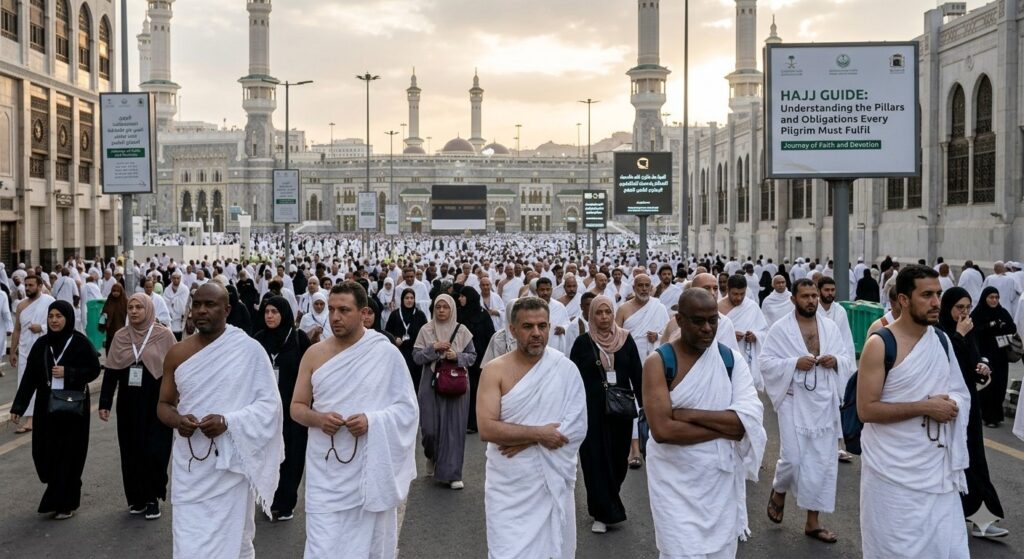
Hajj Guide: Understanding the Pillars and Obligations Every Pilgrim Must Fulfil
By Auwal Ahmad Umar
As preparations for the annual pilgrimage gather momentum, Islamic scholars have continued to emphasise the importance of understanding the core rites of Hajj, particularly its pillars and obligatory acts, which form the foundation of a valid pilgrimage.
Hajj, one of the five pillars of Islam, is not only a physical journey but a deeply spiritual exercise that demands sincerity, discipline and adherence to prescribed rites.
The Pillars That Define Hajj
At the heart of the pilgrimage are four essential pillars, known as Arkanul Hajj, without which the Hajj is considered invalid.
The first is Ihram, the sacred state entered with intention. Male pilgrims wear two simple white garments, while women dress modestly. Beyond the physical appearance, Ihram symbolises humility, equality and total submission to Allah.
Pilgrims also begin reciting the Talbiyah, affirming their readiness to respond to the call of their Creator.
Another key pillar is the standing at Arafat, observed on the 9th of Dhul-Hijjah. Widely regarded as the peak of Hajj, this moment draws millions of pilgrims to the plains of Arafat in prayer and supplication. Islamic teachings stress that missing this rite invalidates the entire pilgrimage.
The third pillar, Tawaf al-Ifadah, involves circumambulating the Ka’aba seven times after the Day of Sacrifice. This act, performed at the Sacred Mosque in Makkah, is indispensable and cannot be substituted.
Also central is Sa’i, the ritual walk between the hills of Safa and Marwa. Pilgrims complete seven rounds, reflecting on the perseverance and faith demonstrated by Hajar (peace be upon her), while engaging in prayers and remembrance of Allah.
Obligatory Acts That Complete the Rites
In addition to the pillars, there are essential duties known as Wajibatul Hajj. While the pilgrimage remains valid if any of these are missed, a compensatory sacrifice becomes necessary.
Among them is entering Ihram at designated points known as Miqat, in line with the directive of the Prophet Muhammad (peace be upon him), who warned against crossing these boundaries without assuming the sacred state.
Pilgrims are also required to spend the night in Muzdalifah after departing Arafat, where they combine prayers, reflect and gather pebbles for subsequent rituals.
The stoning of the Jamarat, symbolising the rejection of evil, is another significant rite. Pilgrims throw pebbles at designated pillars over several days, beginning with Jamrat al-Aqaba on the 10th of Dhul-Hijjah, followed by all three sites during the days of Tashriq.
Equally important is staying in Mina during the 11th to 13th of Dhul-Hijjah, a period devoted to remembrance of Allah, reflection and communal worship.
Scholars also highlight the necessity of remaining at Arafat until sunset, noting that leaving earlier requires a penalty sacrifice. Similarly, shaving or trimming the hair marks the symbolic completion of key rites and reflects spiritual renewal.
Finally, pilgrims perform the Farewell Tawaf (Tawaf al-Wada) before departing Makkah, marking the conclusion of their sacred journey. However, this obligation is waived for menstruating women.
A Journey Beyond Rituals
Religious leaders say understanding these rites is crucial, especially for first-time pilgrims, as Hajj goes beyond physical acts to embody values of patience, sacrifice and devotion.
They note that proper guidance and awareness can help pilgrims perform the rites correctly, ensuring that their journey is both valid and spiritually rewarding.
As millions of Muslims across the world prepare for Hajj, the message remains clear: adherence to the pillars and obligations is essential for a complete and accepted pilgrimage.