

Hajj Beyond the Checklist: The Hidden Safety Risks Nigerian Pilgrims Must Know
Why mental fatigue and identity gaps remain silent threats for Nigerian pilgrims in Makkah
By Abdulrazaq Auwal
As Nigeria prepares annually to airlift tens of thousands of pilgrims to Saudi Arabia, discussions around Hajj safety often follow a familiar script: heat management, hydration, crowd control, and compliance with Saudi regulations. These are essential. But they are not sufficient.
Operational experience from recent Hajj exercises shows that some of the most consequential safety risks facing Nigerian pilgrims are rarely highlighted in public advisories. They sit at the intersection of human behavior, stress, and system failure, areas that infrastructure alone cannot fix.
Two issues stand out: mental fatigue during peak rituals and inadequate identity redundancy when pilgrims become disoriented.
Mental Fatigue: The Underestimated Risk in High-Density Rituals
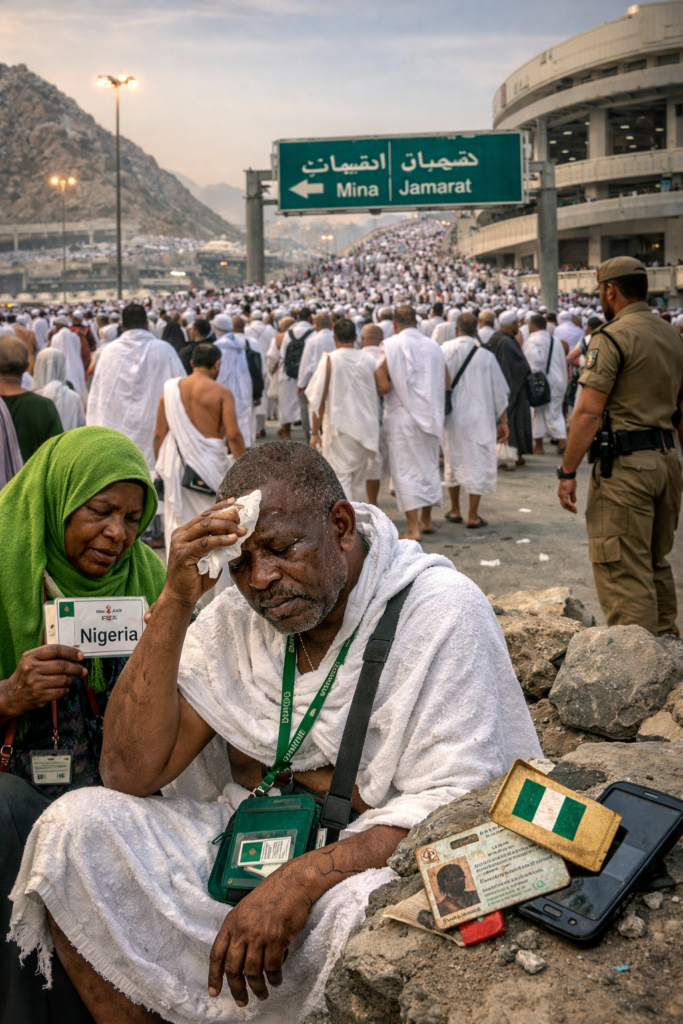
For many Nigerian pilgrims, particularly the elderly, Hajj is the most physically demanding journey of their lives. Long treks between ritual sites, disrupted sleep, emotional intensity, and extreme temperatures create a perfect storm for cognitive exhaustion. Yet, safety messaging rarely addresses how mental fatigue directly contributes to incidents.
During critical movements such as the journey from Arafat to Muzdalifah, overnight stays in Mina, and the stoning at Jamarat, mentally exhausted pilgrims are more likely to lose situational awareness, make impulsive route decisions, panic during slowdowns, or separate unintentionally from their groups.
Field observations from past Hajj seasons indicate that many minor incidents involving Nigerian pilgrims occur after prolonged exertion, not necessarily at the height of congestion, but when judgment is already impaired.
Operational Best Practice:
Pilgrims are advised to pace their rituals, embrace short rest periods, and avoid independent movement decisions during peak hours. Welfare officials are also encouraged to assign mentally alert group leaders, not just physically strong ones, to guide movements.
When ID Fails: Why Wristbands Alone Don’t Protect Pilgrims
Nigerian pilgrims are routinely issued wristbands, ID cards, and delegation tags. However, real-world conditions during Hajj expose a critical weakness: primary identification tools fail more often than planners assume.
Wristbands snap. Cards get misplaced. Mobile phones lose power or network access. When this happens, pilgrims without backup identifiers can spend hours disoriented, particularly the elderly and first-time pilgrims.
Pilgrims who cannot clearly state their state delegation, country, or Mina tent number often face delayed assistance, despite existing support structures.
Risk mitigation that deserves more emphasis: Memorizing state delegation and tent numbers, Carrying secondary ID slips sewn into clothing or footwear, Pre-agreeing on offline rally points within camps.
Recognising NAHCON’s Role in Pilgrim Safety
It is important to note that the National Hajj Commission of Nigeria (NAHCON) has significantly stepped up efforts in recent years to strengthen pilgrim safety awareness. Through structured pre-Hajj orientation programmes, collaboration with state pilgrims welfare boards, and regular dissemination of safety advisories, the Commission has improved baseline preparedness among Nigerian pilgrims.
NAHCON’s growing emphasis on education before deployment, including guidance on crowd movement, health precautions, and compliance with Saudi safety protocols has contributed to a noticeable reduction in avoidable incidents.
However, as operational realities evolve, safety education must also adapt. Integrating deeper insights on human behavior under fatigue and system failure would further strengthen the Commission’s already robust framework.
The Bigger Picture
Hajj safety for Nigerian pilgrims is no longer defined solely by infrastructure, logistics, or compliance. It increasingly hinges on how well pilgrims are prepared to think, decide, and respond under pressure.
The risks that cause the most disruption are often the least discussed. Addressing these blind spots while consolidating existing safety efforts offers Nigeria a clear path to safer, more efficient Hajj operations. As preparations for future Hajj seasons intensify, the challenge is not just to do more, but to prepare smarter.