
Hajj 2026: NAHCON Positions Nigeria for Safer Pilgrimage Healthcare
By Abdulrazaq Auwal
In a conference room in Abuja, approximately six months before the first Nigerian pilgrim is due to board a flight to Jeddah, a critical mission and campaign is already launched to ensure smooth and seamless operation and the hajj activities.
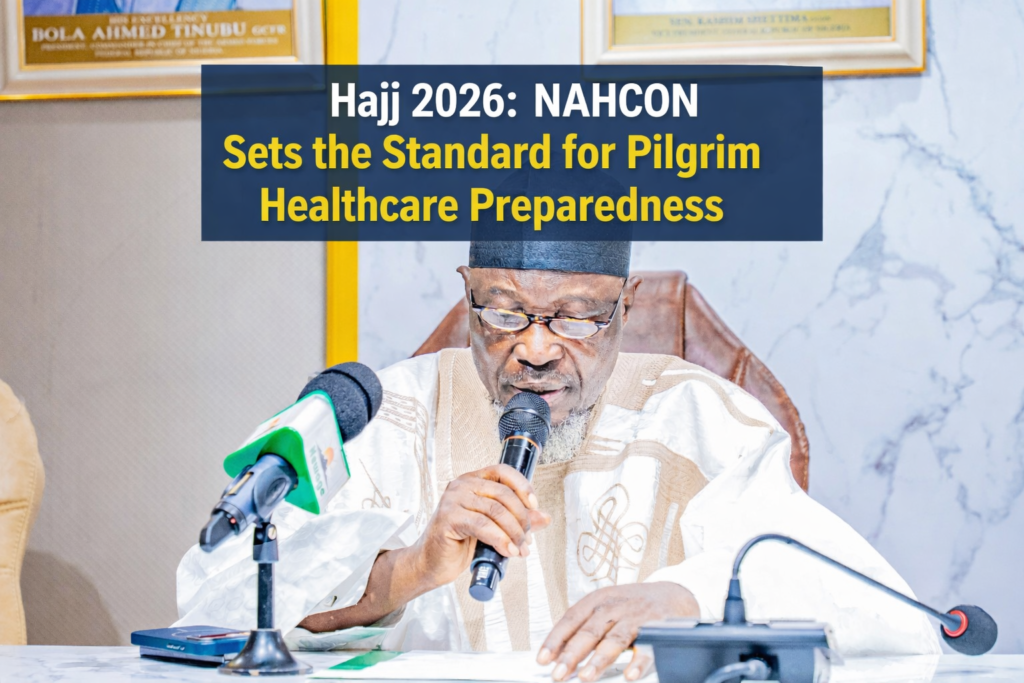
The meeting of State Medical Team Leads convened by the National Hajj Commission of Nigeria (NAHCON) in late December 2025 is beyond a procedural formality, but an opening move in a complex, high-stakes logistical campaign where success is measured in lives safeguarded and national reputation secured.
Under the leadership of Chairman and Chief Executive Officer (CEO), Professor Abdullahi Saleh Usman, NAHCON is executing a fundamental shift, transforming Hajj healthcare from a reactive service into a discipline of proactive, precision-engineered preparedness.
The core strategy, as articulated by Professor Usman, rests on two non-negotiable pillars, extreme forward-planning and absolute compliance. Beginning structured preparations in December for a Hajj taking place in the following summer is a deliberate tactic to defeat the inertia and last-minute chaos that have plagued health operations in the past.
This expanded timeline compels early recruitment, comprehensive training, secured pharmaceutical supply chains, and pre-determined deployment of clinics across key locations such as Mina and Arafat. As Professor Usman emphasised, no component of pilgrim healthcare is to be treated as incidental or optional.
The second pillar is an unwavering focus on the “binding” health guidelines issued by the Kingdom of Saudi Arabia. Usman’s directive that “Nigeria must comply fully and without hesitation” is a statement of both diplomatic necessity and operational philosophy. It is also a deliberate disruption of legacy practices that have historically exposed medical operations to avoidable risks.
Saudi authorities continuously refine their health and other regulations, incorporating lessons from global pandemics and mass-gathering science. For NAHCON, aligning with these standards is not seen as a constraint but as a roadmap to international best practice. This compliance drives the Commission to upgrade infrastructure, adopt digital health tracking systems, and enforce stringent vaccination as well as emergency response protocols, thereby elevating the entire domestic healthcare ecosystem for the pilgrimage.
However, the true test of this strategy lies in the fraught yet crucial nexus between NAHCON and the State Medical Teams. The Chairman’s call for “professionalism and unity of purpose” acknowledges a historic tension inherent in Nigeria’s federalized system.
NAHCON provides the central framework, oversight, and international liaison, while the states are the boots on the ground, supplying personnel and managing frontline delivery. The success of the 2026 plan hinges on transforming this potential friction into a seamless, integrated force.
The early meeting is, therefore, a confidence-building exercise and a forum to synchronise watches, align expectations, and foster a shared culture of discipline where every medical professional, from Kano to Rivers, Sokoto to Borno states operates under one unified standard.
Professor Usman’s NAHCON is, in effect, pioneering a new model for global pilgrimage management. By treating healthcare not as a supportive ancillary but as a “core responsibility” that demands its own dedicated, year-round campaign, Nigeria is positioning itself as a potential leader in the field.
This analytical, systematic approach aims to ensure that the spiritual journey of the Nigerian pilgrim is undergirded by a healthcare safety net that is robust, resilient, and worthy of international respect.
The mission launched in that Abuja conference hall is about more than logistics; it is about building a legacy of excellence that protects citizens and projects Nigerian competence on the world’s most visible religious stage. The 2026 Hajj will be the ultimate audit of this ambitious vision.