
EXCLUSIVE: Weak Financial Readiness Undermining Early Hajj Planning — Dankama
By Abdulrazaq Auwal
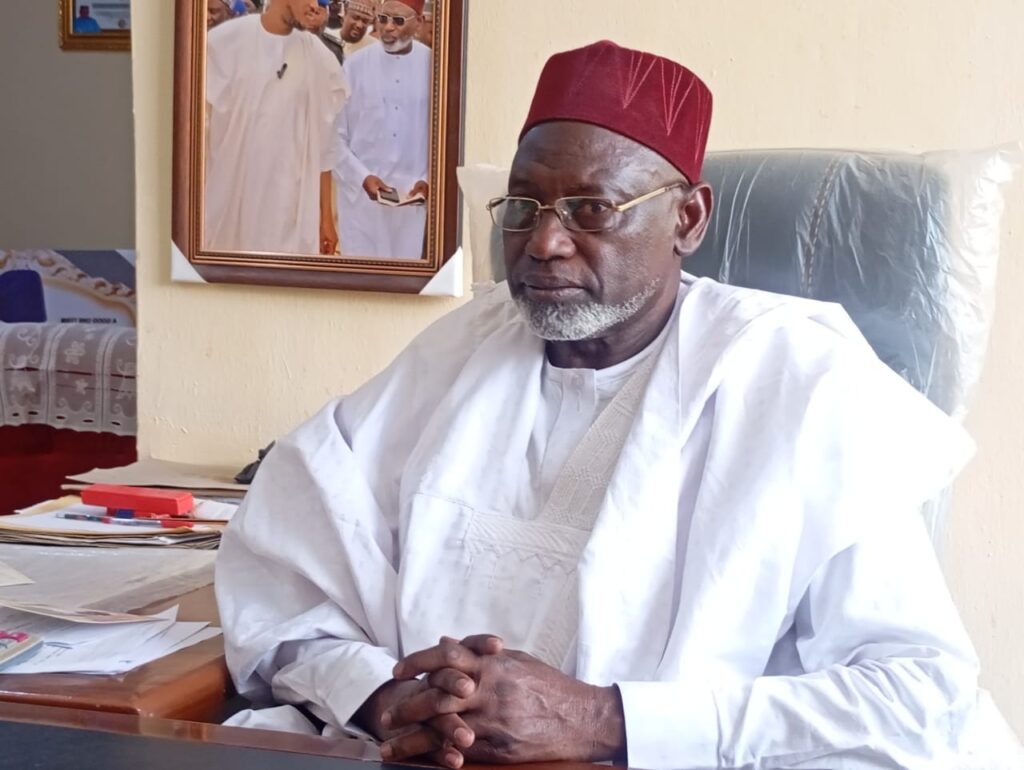
The Executive Director (ED) of the Katsina State Pilgrims Welfare Board, Yunusa Abdullahi Dankama has identified weak financial preparedness among intending pilgrims as a major obstacle to effective early planning for Hajj operations in Nigeria.
Speaking in an interview with Hajj Gazette, the ED noted that while authorities continue to advocate for early registration and structured planning, the effort is consistently undermined by the inability of many prospective pilgrims to mobilize funds in advance.
He explained that the success of early Hajj arrangements, ranging from flight scheduling to accommodation logistics largely depends on timely payments by pilgrims.
However, in the Nigerian context, a significant number of intending pilgrims delay payments until the final stages, creating operational uncertainties for state boards and service providers.
According to him, this trend disrupts strategic coordination and limits the capacity of officials to secure competitive rates for essential services such as airfare, accommodation, and feeding.
“Early planning is only effective when there is corresponding financial commitment from pilgrims. Without that, the system becomes reactive rather than proactive,” he said.
The Executive Director further stressed that late payments often lead to increased costs, as bulk negotiations and early bookings become difficult to execute.
This, he noted, ultimately places additional financial pressure on pilgrims, many of whom are already struggling with rising Hajj fares.
He called for increased financial discipline and awareness among intending pilgrims, urging them to adopt a savings culture that aligns with the Hajj calendar.
He also emphasized the need to take advantage of the Hajj Saving Scheme (HSS) of the National Hajj Commission of Nigeria (NAHCON), a Sharia-compliant digital platform that allow Nigerians to save gradually for the Hajj pilgrimage.
Dankama also called for collaborative efforts between stakeholders, including financial institutions, to introduce flexible payment structures that could ease the burden on pilgrims.
He assured that addressing financial readiness is critical to improving the overall efficiency and sustainability of Hajj operations in Nigeria.