

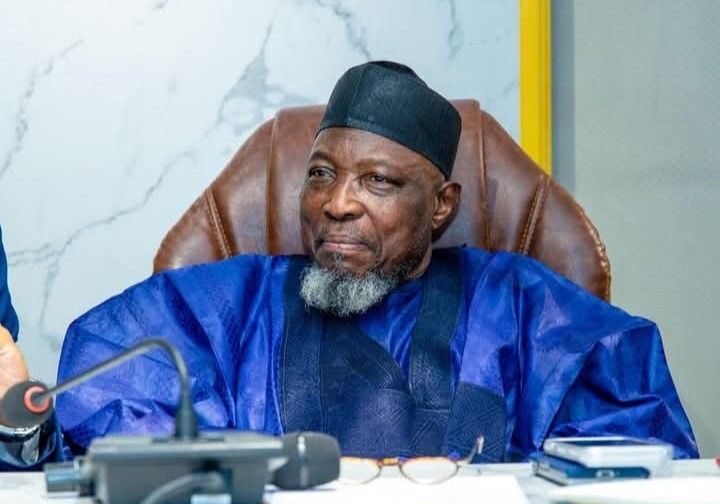
Reading Between the Lines of Prof. Usman’s Resignation Letter
By Abdulrazaq Mungadi
Days after Professor Abdullahi Saleh Usman formally resigned as Chairman and Chief Executive Officer of the National Hajj Commission of Nigeria (NAHCON), the focus has shifted from the announcement itself to the governance, regulatory, and operational implications of his exit at a sensitive point in preparations for the 2026 Hajj exercise.
In a press statement dated Monday, 9 February 2026, Prof. Usman announced his resignation, citing “purely personal reasons” and stressing that the decision reflected no dissatisfaction with the Commission, the Federal Government, or NAHCON’s statutory mandate.
He further confirmed that his resignation was conveyed in writing to President Bola Ahmed Tinubu, in line with Section 3(6) of the NAHCON (Establishment) Act, 2006.
While the letter was conciliatory in tone and heavy on expressions of gratitude to the President, Vice President Kashim Shettima, the NAHCON Board, management, and key stakeholders, governance analysts note that its structure and emphasis point to a deliberate effort to stabilize the institution’s public image and prevent policy uncertainty.
Observers say the repeated insistence on “personal reasons” appears designed to pre-empt speculation and reassure both domestic and international partners, particularly Saudi Hajj authorities, that Nigeria’s Hajj administration remains institutionally intact despite the leadership change.
Prof. Usman’s resignation comes at a critical juncture in the Hajj planning calendar, as issues surrounding pilgrims’ data capture, medical screening, visa issuance, and coordination with service providers are already in progress for the 2026 pilgrimage.
Any leadership vacuum at this stage, analysts warn, could expose the Commission to operational risks if not swiftly addressed.
The resignation letter also underscores strict adherence to due process, with explicit reference to statutory provisions governing NAHCON leadership exits.
This, according to governance experts, signals an attempt to ensure continuity and avoid administrative disputes, particularly as the Commission engages multiple stakeholders across federal, state, and international levels.
Beyond the personal explanations offered, the development has reignited conversations around leadership succession at NAHCON, with stakeholders calling for a seamless transition anchored on competence, institutional memory, and integrity.
Industry players stress that the Commission’s credibility, both locally and with Saudi authorities, depends largely on the caliber and stability of its leadership.
As of the time of filing this report, there has been no official announcement from the presidency regarding an acting chairman or substantive replacement.
However, expectations remain high that the federal government will move swiftly to appoint a successor capable of maintaining policy momentum and safeguarding Nigeria’s interests ahead of the 2026 Hajj.
For now, Prof. Usman exits the stage with a carefully worded farewell that prioritizes institutional harmony. What remains unresolved is how quickly NAHCON can recalibrate its leadership architecture to ensure that governance gaps do not translate into operational setbacks for intending pilgrims.