

History: The Abrah’s failed attempt to rival Kaabah
…History: The Abrah’s failed attempt to rival Kaabah
By Abdulrazaq Auwal
Long before the emergence of Islam in Arabia, an episode unfolded that would later become one of the most widely discussed events in early Islamic history.
The story centers on Abraha al-Ashram, a powerful ruler who governed Yemen under the authority of the Aksumite Kingdom.
His ambitious attempt to shift the religious focus of Arabia away from the sacred sanctuary in Mecca would ultimately fail and become a lasting historical lesson.
The Grand Cathedral in Sana’a
Historical and classical Islamic sources record that Abraha constructed an enormous cathedral in Sana’a known as Al-Qullays.
The structure was designed to be one of the most impressive religious buildings in the region. It was richly decorated and built on a grand scale, reflecting both architectural ambition and political strategy.
READ ALSO:History: The Abrah’s failed attempt to rival Kaabah https://hajjgazette.com/top-10-influential-figures-in-nigerias-hajj-industry-to-impact-2026-hajj/
Abraha’s objective extended beyond religious devotion. At the time, the Ka’aba already served as the most important pilgrimage destination for the Arab tribes.
Pilgrimage brought not only spiritual prestige but also significant economic activity to Mecca.
By establishing a monumental cathedral in Sana’a, Abraha hoped to redirect pilgrimage routes to Yemen and elevate his territory as a competing religious center.
Resistance from the Arab Tribes
Despite the grandeur of the cathedral, the plan failed to gain acceptance among the Arab tribes. The Ka’aba had long been revered as a sacred sanctuary, and its spiritual significance was deeply rooted in the traditions of the region. Pilgrims continued to travel to Mecca rather than to Sana’a.
Classical narratives mention that tensions increased when reports reached Abraha that an Arab had desecrated the cathedral.
The incident, whether symbolic or literal, was perceived as a direct insult to the prestige of the structure and to Abraha’s authority.
The event reportedly intensified his determination to challenge the centrality of the Ka’aba.
The March Toward Mecca
According to Islamic historical tradition, Abraha eventually mobilized a large army and set out toward Mecca with the intention of destroying the Ka’aba.
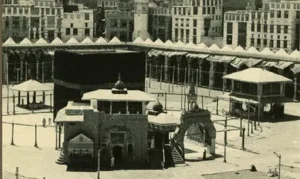
The campaign became associated with what later Islamic sources refer to as the Year of the Elephant, a name derived from the presence of war elephants within the advancing force.
As the army approached the sacred city, the inhabitants of Mecca were unable to mount a meaningful military defense. Instead, they placed their trust in divine protection for the sanctuary.
A Turning Point in Islamic Tradition
The fate of Abraha’s expedition is referenced in the Qur’anic chapter Surah Al-Fil, which describes how the invading army was ultimately defeated.
Islamic tradition recounts that flocks of birds appeared and struck the army with stones, causing the campaign to collapse before the Ka’aba could be harmed.
The episode became one of the most memorable events in Arabian religious history and is believed to have occurred in the same year that the Prophet Muhammad (peace be upon him) was born.
Legacy of the Failed Rival Shrine
Abraha’s cathedral in Sana’a never achieved the goal of replacing the Ka’aba as the focal point of pilgrimage. While the building itself gradually faded from prominence in the historical record, the Ka’aba continued to hold its position as the spiritual center for pilgrims across the Arabian Peninsula.
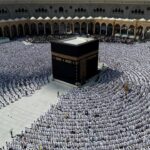
Centuries later, the Ka’aba remains the focal point of the annual Hajj pilgrimage, drawing millions of worshippers to Mecca each year.
Some later cultural accounts and local narratives in Yemen claim that the location associated with the remains of Abraha’s once-grand cathedral eventually fell into neglect and now treated as a refuse or waste dumping site.
Historians note that such descriptions reflect later conditions and popular storytelling rather than a firmly documented historical outcome.
Nevertheless, the contrast has often been cited symbolically in retellings of the story.
For historians and scholars of Islamic tradition, the story of Abraha’s cathedral illustrates an enduring lesson: monumental architecture and political power alone cannot displace a sacred institution that is deeply rooted in faith and tradition.