
2026 Hajj Slot: States Demand More Seats, NAHCON Cites Limits
By Hajj Gazette’s Team
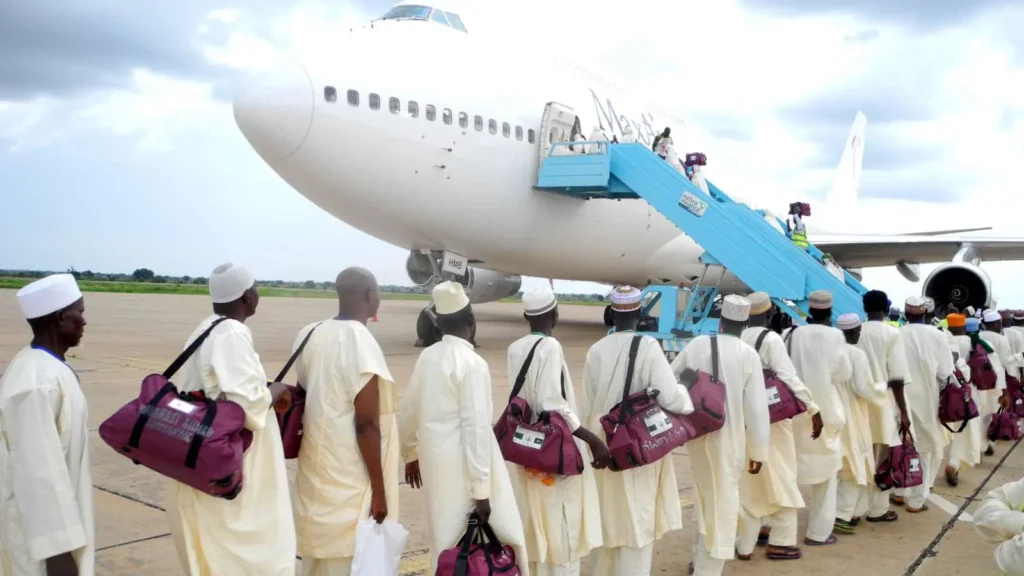
As preparations for the 2026 Hajj season gather momentum, pressure is mounting on the National Hajj Commission of Nigeria (NAHCON) following renewed calls by several states for additional pilgrimage slots.
The demand surge, driven largely by early payments and heightened public interest, has once again exposed the structural constraints within Nigeria’s Hajj allocation framework.
Across multiple states, officials of Pilgrims Welfare Boards confirm that their allotted seats have either been exhausted or are nearing full capacity, prompting formal requests to NAHCON for additional slots.
However, the prospect of securing extra allocations remains uncertain, largely due to logistical limitations and the fixed quota issued by Saudi Arabian authorities.
Kebbi Pushes for Expansion Amid Rising Demand
In Kebbi State, the Executive Chairman of the State Pilgrims Welfare Agency, Alhaji Faruku Aliyu Yaro, disclosed that the state has formally written to NAHCON requesting additional Hajj seats.
According to him, the existing allocation no longer reflects the growing interest among intending pilgrims, particularly as payment processes and logistical arrangements intensify nationwide.
He expressed optimism that the Saudi government might consider expanding Nigeria’s overall quota, especially as preparations for the 2026 Hajj enter a more advanced phase. Nonetheless, he acknowledged that such an outcome remains contingent on international approvals beyond the control of state authorities.
Bauchi Under Intense Public Pressure
Bauchi State presents one of the most compelling cases for additional slots, with officials citing intense pressure from intending pilgrims who have already liquidated personal assets in anticipation of the pilgrimage.
“We have already made a formal request,” said Muhammad Nasir Bala, Information Officer of the Bauchi State Muslim Pilgrims Welfare Board. “We are under serious pressure from intending pilgrims who have disposed of their farm produce and livestock to pay for the 2026 Hajj.”
The situation in Bauchi highlights the socio-economic dimensions of Hajj preparation in Nigeria, where many pilgrims rely on the sale of seasonal agricultural assets to finance the journey, leaving little room for reversals once payments are made.
Gombe Takes a Cautious, Capacity-Driven Approach
In contrast, Gombe State has ruled out seeking additional slots, citing accommodation and planning constraints. The Executive Secretary of the Gombe State Muslims Pilgrims Welfare Board, Alhaji Sa’adu Hassan, confirmed that the state has fully exhausted its allocation, strictly tied to available accommodation in Saudi Arabia.
“In Gombe State, we have exhausted the number of seats given to us, and those are seats we already have accommodation for,” he said.
He revealed that some intending pilgrims who made partial payments have since withdrawn and redirected their funds to other states or private tour operators. According to him, the board deliberately avoided requesting additional seats to prevent overextension and logistical breakdown.
“We made it clear long before now that our arrangement is strictly on a first-come, first-served basis. Requesting more seats would mean demanding additional rooms and facilities, which we are not prepared to do,” he told Hajj Gazette.
Kano Enforces NAHCON Deadline Rigorously
Kano State has adopted one of the strictest compliance stances, with the State Pilgrims Welfare Board confirming that it has not accommodated any pilgrim seeking Hajj slots after NAHCON’s official closure deadline of December 5, 2025.
The board’s Public Relations Officer, Sulaiman Abdullahi Dederi, stated that no late registrations have been accepted and that the state did not purchase slots from other states to absorb excess demand.
“Since the closure by NAHCON, we have not opened any doors for late applicants, nor purchased slots from other states to accommodate them,” he said, adding that he was not aware of any state that had officially reopened registration for latecomers.
NAHCON Confirms Requests, Cites Constraints
Meanwhile, sources within NAHCON confirmed that several states have submitted formal requests for additional Hajj slots. However, the commission acknowledged that none of the requests has been granted due to non-availability.
The development underscores the structural rigidity of Hajj quota management, which is largely determined by Saudi Arabia and leaves limited flexibility for mid-cycle adjustments, regardless of domestic demand pressures.
A Recurring Challenge
The unfolding situation once again brings to the fore the perennial challenge of balancing growing pilgrim interest with fixed international quotas, accommodation limits, and logistical realities. As Nigeria’s Muslim population continues to grow and awareness of early Hajj planning improves, experts warn that the demand-supply gap may widen unless long-term reforms are implemented.
For now, thousands of intending pilgrims remain hopeful that diplomatic engagements and evolving logistics may yet create room for expansion—though history suggests that expectations must be carefully managed.
Beyond quota limitations, recent reforms to the Hajj payment system have marked a shift from an unsustainable past to a more structured and transparent framework. The new payment regime has effectively addressed the chronic problem of late payments that characterized the old system, under which pilgrims could pay incrementally up to the point of departure.
While the transition initially caused confusion among some pilgrims accustomed to the previous arrangement, stakeholders agree that the reform represents a net positive, strengthening planning, improving accountability, and positioning Nigeria’s Hajj operations on a more predictable and globally compliant footing ahead of the 2026 exercise.