

The Nasarawa State Example: A Practical Solution to Pilgrims Loitering in Makkah
By Nur Umar Abdulrahman
Recently, I came across an advisory warning Nigerian pilgrims to desist from loitering on the streets in Makkah. I wondered why and how one would prefer lying under the hot sun instead of returning to the comfort of his bed and fully air-conditioned room to rest. Of course, I saw my fellow pilgrims from other states sitting on the bare coal-tarred roads eating sabil (charity meals), whose containers they dump there as well. The situation is an eyesore. They probably aren’t doing this out of pleasure; they may also be victims of circumstances. Unless some things change, I see the Nigerian Hajj Commission and Saudi government shouting to the high heavens, yet the situation continues.
I see in the Nasarawa accommodation an antidote to the perennial problem of Nigerian pilgrims loitering in Makkah against the Saudi regulations.
I observed that Al-Farabi, the Nasarawa accommodation, is among the closest Nigerian pilgrims’ facilities to the Haram. This proximity appeared to have a direct impact on the Nasarawa state pilgrims’ movement patterns for prayers. Many pilgrims were able to return to their accommodation between prayer periods for rest before proceeding back to the mosque for the next. Consequently, I observed that fewer pilgrims from the state spent extended periods on streets, walkways, or other public spaces around the Haram. This phenomenon is partly due to the 10-15 minute walk from Al Farrabi to the Haram, which allows pilgrims to return to their accommodation between prayers.
The Hajj Commission of Nigeria should enforce strict booking of accommodation at a shorter distance to the haram to tackle this problem. Only pilgrims who would have to walk one hour or one and a half hours to and from the Masjid al Haram to their hotel and return again one hour later for the next prayer would contemplate waiting on the hot streets to conserve energy.
This circumstance touches a deeper operational factor. Where accommodation is located far from the Haram, pilgrims may face lengthy walks that can discourage frequent returns to their lodgings between prayers. In such circumstances, some may choose to remain outdoors for prolonged periods despite the heat and associated discomfort. Accommodation closer to the Haram provides pilgrims with a practical alternative by allowing easier access to both worship and rest.
This prolonged exposure to heat is detrimental to their health aside from the embarrassment it causes Nigeria. Regarding the sabil, the Hajj Commission can identify those who are distributing it and establish an agreement to share the sabil fairly among the accommodations. On the other hand, providing accommodation at shorter distances can encourage the pilgrims to return to their rooms after collecting the sabil.
During my stay at the Nasarawa pilgrims’ accommodation in Makkah, I observed several aspects of the Board’s operations and pilgrim welfare arrangements that may be of interest for future Hajj planning and evaluation.
A noteworthy arrangement concerned the disbursement of pilgrims’ Basic Travel Allowance (BTA). Information that I obtained from some pilgrims I interacted with indicated that only one hundred dollars was converted to riyals at the CBN rate and provided to them before departure. The balance was delivered to them in dollars in Saudi Arabia. This arrangement may have applied to all pilgrims or only to those who preferred it. Notwithstanding, this arrangement reduced the amount of cash carried during transit between Makkah and Madinah and may have helped mitigate the risk of Nasarawa State pilgrims being swindled or suffering financial losses.
My informal interactions with several pilgrims also suggested a reasonable level of awareness regarding this financial management and personal security. In separate conversations with a few uneducated and unexposed pilgrims, they demonstrated caution when I approached them about their travel allowances. I tried a few gimmicks to coax them into allowing me to see their BTA; my plans did not work. I attribute this success to the effectiveness of the pre-departure orientation and sensitisation programmes carried out by the board.
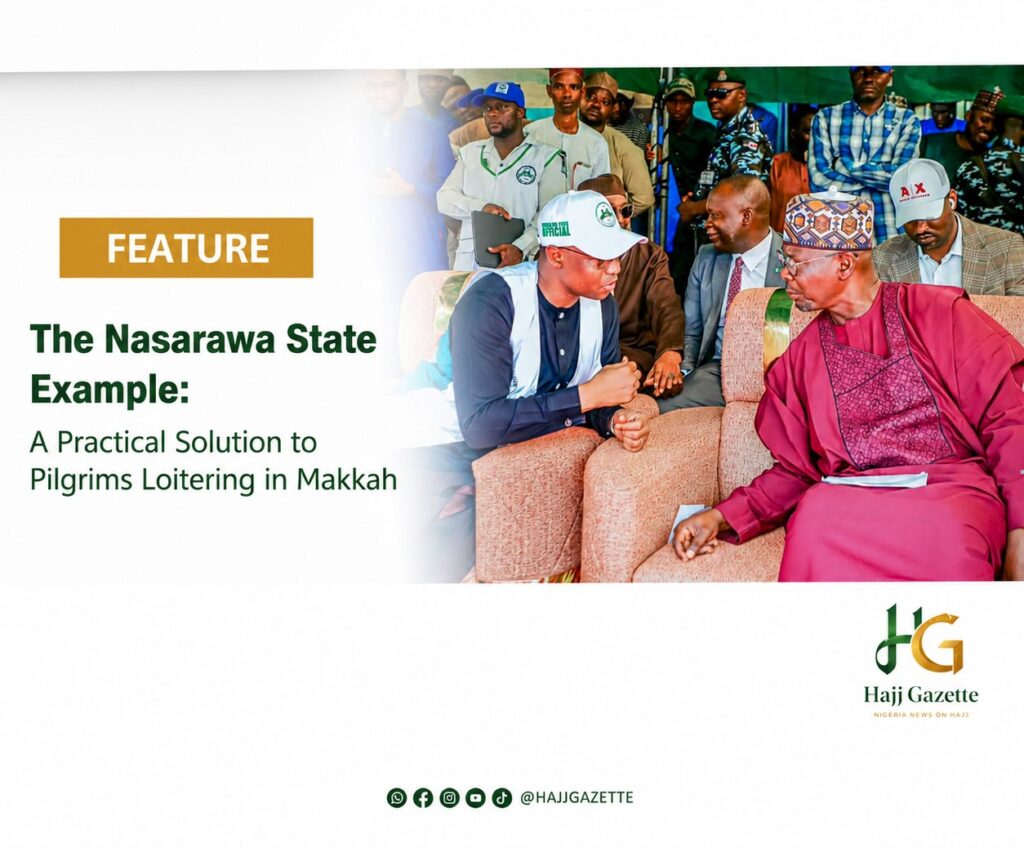
I commend the executive secretary of the board, Mal Idris Almakura, during critical operational activities. He was often seen interacting with pilgrims and his staff members, who generally spoke positively about his management style, even behind his back, demonstrating his respect and honour. He was accessible to them at all times and gave instructions amicably. It is most probably this cordial working relationship that bred their sense of shared responsibility for them to ensure that he succeeds as a leader.
Overall, these observations point to the significance of accommodation location, pilgrim orientation, leadership visibility, and financial management arrangements in enhancing pilgrims’ welfare and operational efficiency during Hajj.
Nur Umar
It can be reached at abdulrahmanmtom@gmail.com.

