

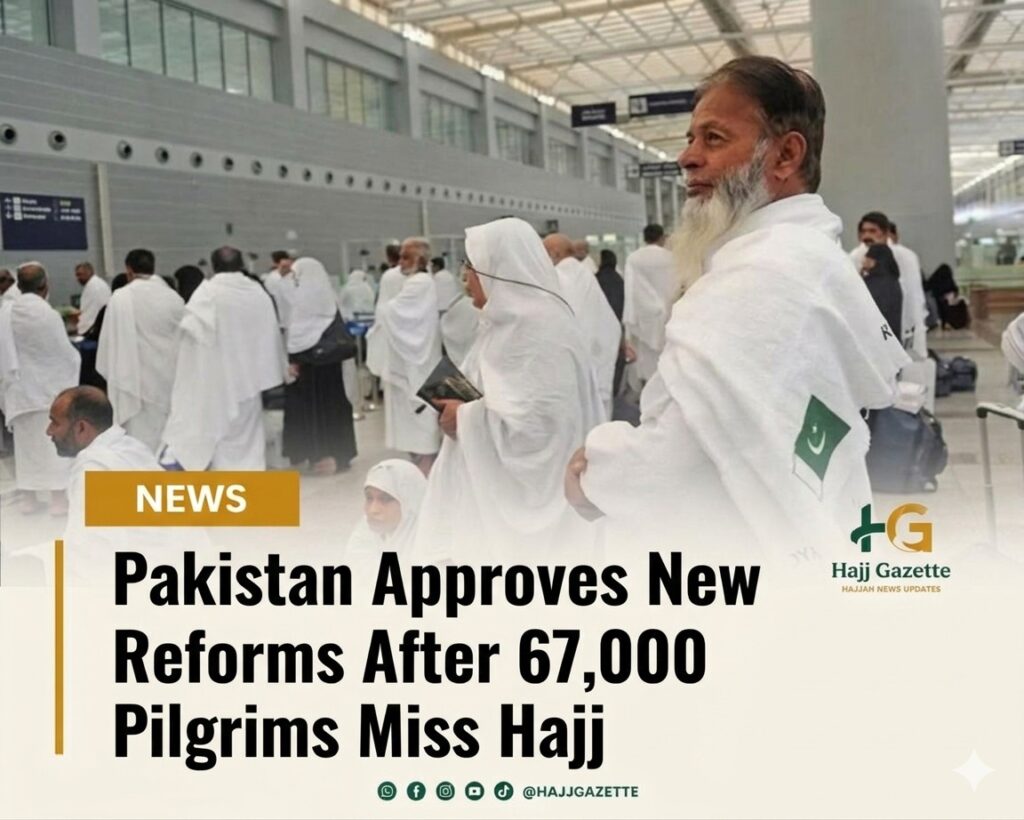
Pakistan Approves New Reforms After 67,000 Pilgrims Miss Hajj
New policy introduces performance-based regulation, digital payments, and stricter licensing for private operators
By Abdulrazaq Auwal
The federal cabinet has approved a new package of reforms aimed at overhauling Pakistan’s private Hajj management system following a crisis that left 67,000 pilgrims unable to perform Hajj in 2025.
The setback prompted an official inquiry ordered by Prime Minister Shehbaz Sharif, alongside parliamentary scrutiny and intense public criticism of the private Hajj system.
Under the new policy framework, the government will replace the existing quota system with a performance- and compliance-based model. Authorities will re-evaluate all private Hajj operators and declare non-performing companies inactive.
The government has also introduced a minimum threshold requiring each operator to secure at least 2,000 pilgrims, a move designed to ensure financial stability and operational capacity within the sector.
In a major structural shift, the policy requires external experts to conduct independent assessments and rank Hajj companies, while authorities will issue operating licences on a three-year cycle.
The reforms further introduce a fully digitized operational system for private Hajj arrangements.
Operators will no longer handle pilgrims’ funds directly, as authorities will route all payments through regulated banking channels to eliminate financial mismanagement and strengthen accountability.
Officials said the reforms aim to protect pilgrims, restore confidence in the system, and align Pakistan’s Hajj administration with Saudi Arabia’s Vision 2030 transformation agenda.
The Ministry of Religious Affairs said it will closely monitor implementation ahead of the 2027 Hajj season to enforce strict compliance across all licensed operators.