
One Direction, One Center: The Enduring Power of Masjid al-Haram
By Abdulrazaq Auwal
Masjid al-Haram in Makkah is not merely a place of worship; it is the operational and spiritual nucleus of Islam. It stands as the most consequential religious asset in the Muslim world, anchoring faith, identity, and unity for over a billion believers.
At its core lies the Kaaba, the immutable focal point toward which Muslims across continents align five times daily. This singular orientation is not symbolic window-dressing; it is Islam’s most powerful instrument of cohesion.
The sanctuary’s gravity is absolute. From the moment a Muslim sets eyes on the Kaaba, hierarchy dissolves. Titles, borders, wealth, and status become irrelevant. Masjid al-Haram enforces equality by design.
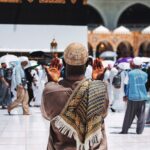
The dress code of ihram strips pilgrims of outward distinction, while the ritual of tawaf compels every individual to move in the same orbit, at the same pace, around the same center. The message is blunt and non-negotiable: God is central; humanity is peripheral.
Historically, Masjid al-Haram predates cities, empires, and modern states. Islamic tradition traces its foundations to Prophet Ibrahim (Abraham) and his son Ismail, positioning the sanctuary as a legacy project spanning millennia.
This historical continuity gives the mosque strategic depth. It is not a relic frozen in time; it is a living institution that has scaled relentlessly to meet the demands of a growing global ummah.
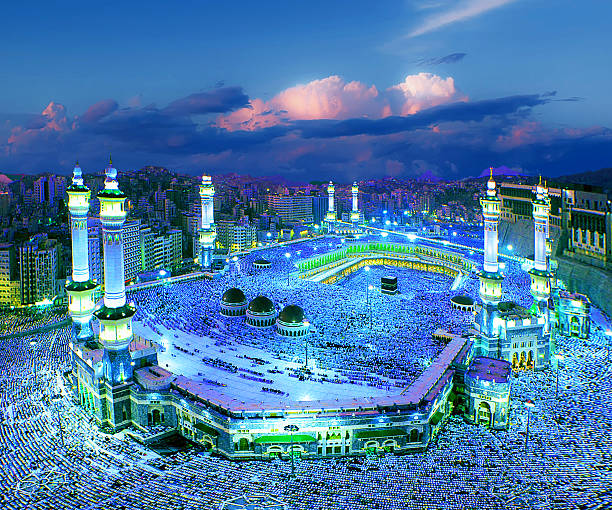
Expansion after expansion has transformed Masjid al-Haram into the largest mosque on earth, capable of accommodating millions without compromising its spiritual architecture.
From an infrastructure perspective, the mosque is a masterclass in high-stakes operations management. Crowd control, safety engineering, climate moderation, and real-time surveillance are executed at a scale unmatched by any other religious site in the world.
During Hajj and Umrah seasons, Masjid al-Haram functions like a megacity compressed into a sacred footprint. The logistical precision required to move, secure, and serve millions of worshippers simultaneously is not accidental; it is the result of deliberate, sustained investment by Saudi authorities who understand the mosque’s global reputational and religious value.
Yet, the power of Masjid al-Haram is not rooted in concrete or technology. Its real capital is spiritual trust. Muslims believe that a single prayer within its precincts carries rewards multiplied beyond measure.
This belief drives behavior, shapes life goals, and fuels lifelong aspirations. For many, visiting Masjid al-Haram is not a luxury; it is a defining milestone. It is where repentance is recalibrated, gratitude is sharpened, and purpose is renegotiated.
The sanctuary also functions as Islam’s moral equalizer. It attracts kings and commoners, executives and laborers, scholars and first-time believers. All stand shoulder to shoulder, accountable to the same divine standard.
In an era fractured by inequality and polarization, Masjid al-Haram delivers a counter-narrative grounded in submission, discipline, and collective responsibility.
In strategic terms, Masjid al-Haram is Islam’s most potent soft-power asset. Images of the Kaaba resonate instantly across cultures, languages, and political boundaries. It is the visual shorthand of Muslim identity, instantly recognizable and emotionally charged. No other structure commands such universal allegiance with zero coercion.
Ultimately, Masjid al-Haram is not just the sanctuary of every Muslim; it is the axis around which Muslim life, law, and longing revolve. It sets direction, literally and figuratively.
In a volatile world, it remains constant. In a distracted age, it restores focus. And in the calculus of faith, Masjid al-Haram remains Islam’s most valuable and irreplaceable center of gravity.