

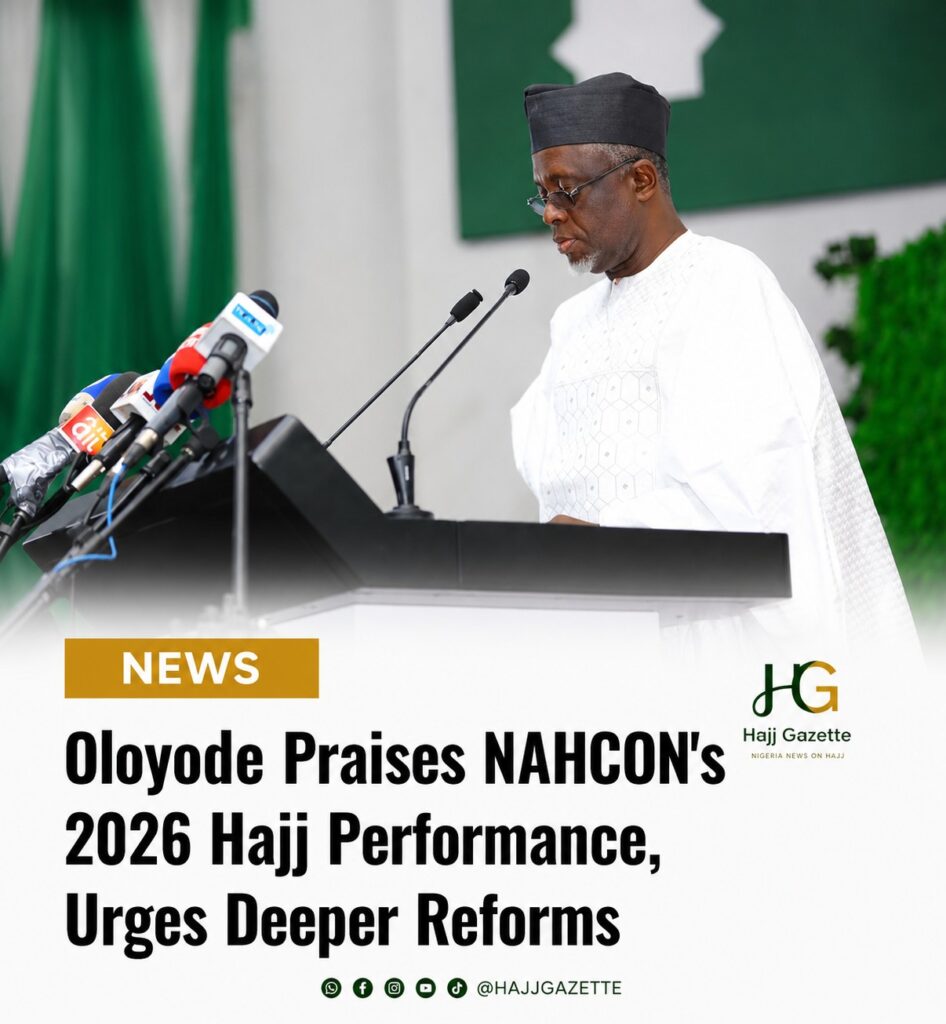
Oloyode Praises NAHCON’s 2026 Hajj Performance, Urges Deeper Reforms
By Abdulrazaq Auwal
The Secretary-General of the Nigerian Supreme Council for Islamic Affairs (NSCIA), Prof. Is-haq Oloyede, has commended the National Hajj Commission of Nigeria (NAHCON) for delivering a significantly improved 2026 Hajj operation, while calling for comprehensive reforms to build a more efficient, pilgrim-centered Hajj administration.
Oloyede made the remarks on Wednesday while delivering the keynote address at the Stakeholders’ Summit on the 2026 Hajj Review and the NAHCON Reform Agenda in Abuja.
He praised the leadership of NAHCON Chairman, Ambassador Ismail Abba Yusuf, saying the Commission had restored confidence in Hajj administration through improved coordination, accountability and service delivery.
According to him, the absence of the negative publicity that had previously characterized Hajj operations reflected a new direction for the Commission.
“It is apparent to the blind and audible to the deaf that it is a new dawn and a good change,” Oloyede said, adding that the current leadership had demonstrated commitment to repositioning the Commission for excellence.
He also acknowledged the support of President Bola Ahmed Tinubu, Vice President Kashim Shettima, the Commission’s board, staff and other stakeholders for contributing to the success of the 2026 pilgrimage.
Oloyode Praises NAHCON’s 2026 Hajj Performance, Urges Deeper Reforms
The NSCIA Secretary-General noted that the successful completion of the outbound airlift ahead of Saudi Arabia’s deadline, full pre-departure visa issuance, improved diplomatic engagement and enhanced welfare services demonstrated that disciplined planning and inter-agency collaboration could deliver positive outcomes.
Despite the commendation, Oloyede stressed that the Commission must pursue deeper institutional reforms to sustain the progress recorded.
He argued that the success of Hajj operations should not be measured solely by flight schedules or completed contracts, but by the overall experience of pilgrims from registration and orientation to accommodation, feeding, transportation, medical care and post-Hajj evaluation.
He identified rising pilgrimage costs, changing Saudi regulations, uneven institutional capacity among states, inadequate communication and inconsistent pilgrim education as key challenges requiring sustained attention.
Oloyede urged NAHCON to strengthen professionalism, accountability and service standards, insisting that continuous reforms would be essential to reposition Nigeria’s Hajj industry as a model of service excellence while placing pilgrims’ welfare at the center of every operational decision.