
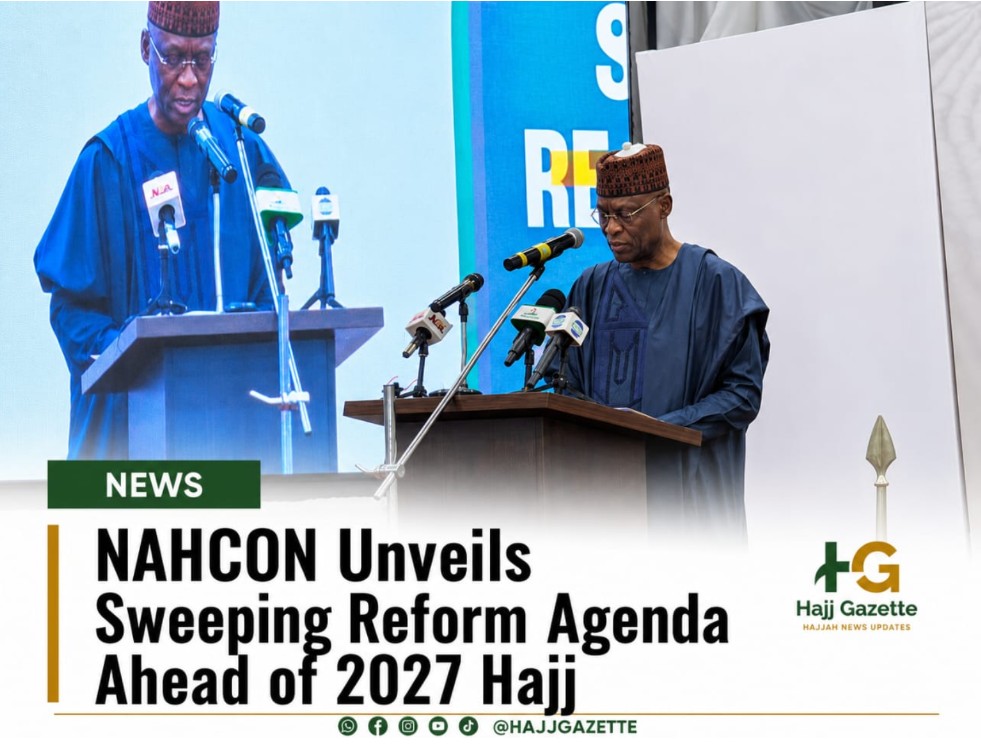
NAHCON Unveils Sweeping Reform Agenda Ahead of 2027 Hajj
By Abdulrazaq Auwal
The National Hajj Commission of Nigeria (NAHCON) has unveiled an ambitious reform agenda aimed at transforming the country’s Hajj administration ahead of the 2027 pilgrimage, with a strong emphasis on digitalization, transparency, accountability and professional service delivery.
Chairman and Chief Executive Officer of NAHCON, Ambassador Ismail Abba Yusuf, announced the reforms on Wednesday while delivering his opening address at the Stakeholders’ Summit on the Post-2026 Hajj Review and NAHCON Reform Agenda in Abuja.
He said the Commission is repositioning Nigeria’s Hajj industry to align with Saudi Arabia’s Vision 2030 reforms, which have transformed global pilgrimage management through sweeping digital innovations.
According to him, the reform program seeks to institutionalize early planning, strengthen financial governance, enhance regulatory oversight and improve service delivery across all stages of Hajj operations.
Yusuf said the Commission also plans to decentralize operational responsibilities by allowing State Muslim Pilgrims Welfare Boards and licensed tour operators to take greater responsibility for pilgrim services while NAHCON focuses on regulation and oversight.
NAHCON Unveils Sweeping Reform Agenda Ahead of 2027 Hajj
He noted that professional certification for Hajj managers, standardized pilgrim education and comprehensive regulation of Umrah operations would form part of the new policy direction.
The NAHCON Chairman described the summit as a platform for accountability, saying it would critically assess both the successes and shortcomings of the 2026 Hajj to strengthen future operations.
“We must examine our achievements to determine how to institutionalize them, while ensuring every shortcoming is addressed with a practical solution,” he said.
Yusuf added that the outcome of the summit would directly shape the Commission’s roadmap for the 2027 Hajj and guide future engagements with Saudi authorities.
He urged stakeholders, including state pilgrimage boards, tour operators, airlines, medical teams and regulators, to contribute practical recommendations capable of improving Nigeria’s Hajj administration.
The summit brought together government officials, religious leaders, Saudi representatives and industry stakeholders to review the 2026 Hajj exercise and chart a new direction for subsequent pilgrimages.