
Hajj Operation: Need for State Government to Give a Helping Hand
By: Abubakar Jiddah Usman
It would not be surprising if it is said that the Saudi Arabian authorities are in the process of crossing the “t”s and dotting the “i”s of the 2027 and 2028 Hajj operations as preparation for the annual event.
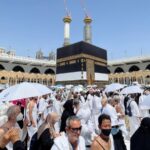
It is a fact that they are always far ahead in terms of planning and execution of the fifth pillar of Islam, which is performed nowhere on earth except in Makkah. Being host to millions of Umrah and Hajj pilgrims year in, year out, the Saudis do not have the luxury of a late outing. Hence, they always hit the ground running.
It is said that whoever fails to plan has only planned to fail. One observes that a day after the three-day stay in Muna, the Saudis are always out with a schedule for the next Hajj exercise for participating countries to align with.
Countries like Malaysia, Indonesia, and others that have established Hajj schemes which are religiously adhered to are never caught unawares. They always fill their quotas and even request additions. Their Hajj Saving Schemes are working perfectly for them. As such, Saudi deadlines are almost meaningless to them, except where some technical hitches, which are rare, occur either at their end or at the Saudis’ end. One hardly hears these countries, in spite of their large numbers, requesting extensions from the Saudis.
In the case of Nigeria, it is entirely a different ballgame, as if our own Hajj exercise is different. That is why the Saudis are always sounding notes of warning to Nigeria and her likes to adhere to timelines. For years, Nigeria has always requested extensions for visas, flights, payments, etc., and we are always lucky to be obliged.
However, from last year, the Saudis have started closing extension windows in our face. This might probably be one of the reasons for the reduction of Nigeria’s quota this year; one can’t say!
I am in total support of this measure. At least, it is time we start respecting time and schedules.
However, one cannot entirely blame Nigeria for these late preparations, though she could if looked at from a different point of view.
Nigeria cannot be blamed if one takes cognisance of the fact that most Nigerian pilgrims are peasant farmers and petty businessmen, which makes it a herculean task for them to pay their Hajj fares at once as and when due. Hence, Nigeria’s always requesting extensions. On the other hand, this is not an excuse, because one may ask what measures are on ground to work around this problem. The truth is that there are none as of now, except for the ad hoc Hajj Saving Scheme being experimented with, which has recorded poor response from intending pilgrims.
This, therefore, makes it imperative to call on state governments to come to the aid of intending pilgrims by loaning their state pilgrims welfare boards some reasonable amounts of money to effect payment on behalf of pilgrims who might have deposited at least half or three-quarters of the Hajj fares, to fast-track all necessary contractual engagements with the Saudis on Hajj matters.
For now, Jigawa and Kebbi States have blazed the trail. It only remains for other states to borrow a leaf from them.
Already, Nigerians have been reminded that the deadline for data capturing of pilgrims this year still remains the eighth of this month, just three days away from today.
No one is saying state governments should pay; rather, they should loan money to their pilgrims welfare boards to ensure that intending pilgrims are captured while they struggle to balance up, after which the boards repay the loan and await the following year’s exercise.
If this is done for now, Nigeria will not go cap in hand begging for extensions.
This suggestion to state governments is only an interim measure. For the long-term measure, the National Hajj Commission of Nigeria (NAHCON) and state pilgrims welfare boards, commissions, and agencies should fast-track the Hajj Saving Scheme, which is the easiest and surest way to fall in line with other countries in strictly adhering to the Saudi Hajj timetable and schedule.
Hajj handlers should put on their thinking caps to fashion out a strategy that would ensure intending pilgrims going through state boards effect payment through the Hajj Scheme. Here, participating banks should be encouraged to expand their services to rural areas, as against what obtains today, where their services are domiciled only in cities.