

Hajj 2027: Why Health Awareness, Personal Hygiene Matter
By Khadija Muhammad Umar
As preparations for the 2027 Hajj gather pace, health awareness and personal hygiene remain essential to protecting Nigerian pilgrims against preventable illnesses during the annual pilgrimage to Saudi Arabia.
The physically demanding nature of Hajj, large gatherings and prolonged exposure to hot weather make adequate health preparation an important part of a successful pilgrimage.
Intending pilgrims need to understand basic preventive measures, recognise warning signs of illness and know when to seek medical attention.
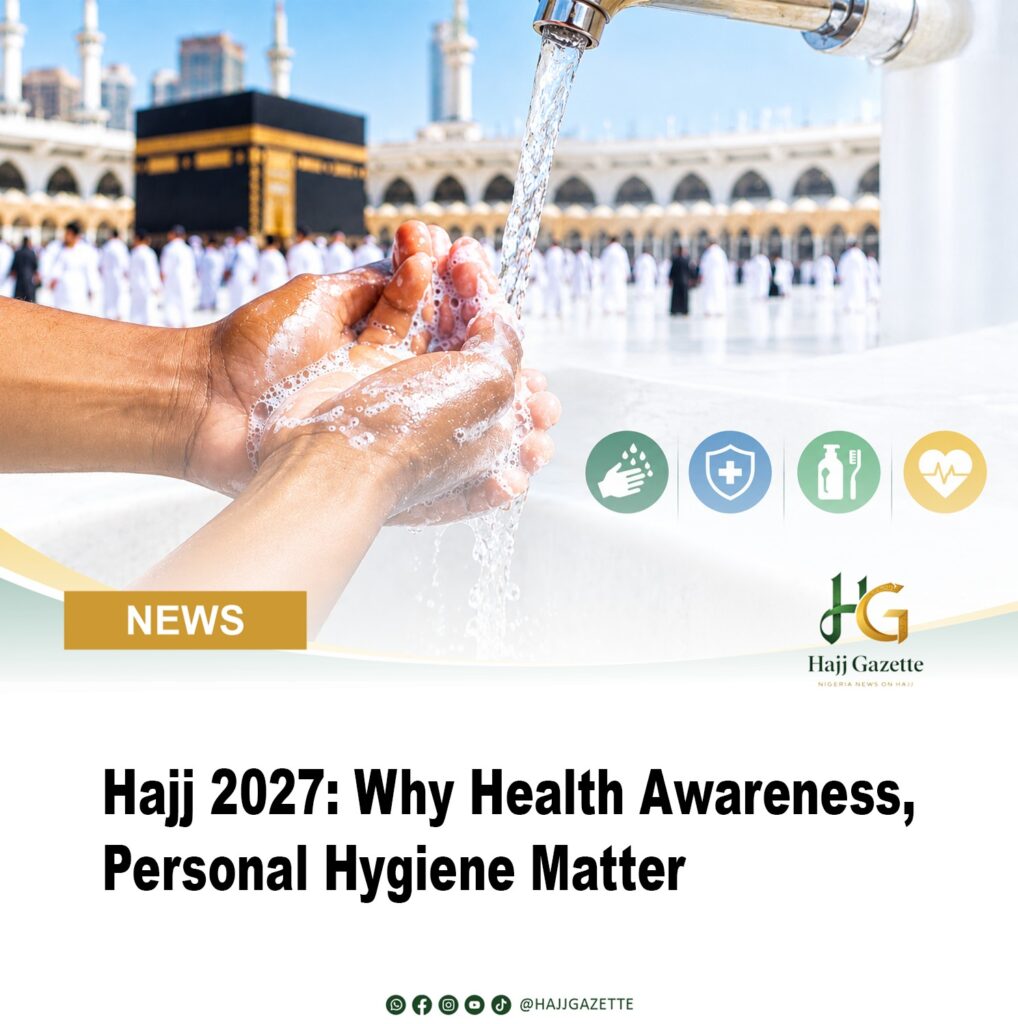
Regular handwashing with soap and clean water, proper food handling, safe drinking water and maintaining personal cleanliness can help reduce the risk of infections.
Pilgrims should also follow official guidance on respiratory hygiene and take appropriate precautions in crowded places.
Medical screening before departure is equally important. Pilgrims with existing health conditions should consult their healthcare providers, ensure they have sufficient prescribed medication and carry relevant medical information throughout the journey.
Hajj 2027: Why Health Awareness, Personal Hygiene Matter
Vaccination requirements must also receive attention. Intending pilgrims should comply with applicable Nigerian and Saudi Arabian health regulations, including mandatory vaccinations, and confirm the requirements for the 2027 Hajj through official channels.
Heat-related illnesses present another major concern. Pilgrims should drink adequate water, avoid unnecessary exposure to direct sunlight, rest when necessary and seek medical assistance if they experience signs of heat exhaustion or other serious symptoms.
Health awareness should not end at the departure airport. Pilgrims need continued guidance throughout their stay in Makkah, Madinah and other pilgrimage locations, particularly during periods of intense physical activity.
The National Hajj Commission of Nigeria (NAHCON), state pilgrims’ welfare boards, medical teams and licensed Hajj operators have important roles to play in delivering practical health education before departure and throughout the pilgrimage.
Effective enlightenment should go beyond general instructions to provide clear guidance on disease prevention, personal hygiene, medication use, emergency contacts and access to medical services.
As preparations for Hajj 2027 continue, stronger health education and personal responsibility will remain critical to safeguarding pilgrims’ wellbeing and helping them perform their religious obligations safely.