

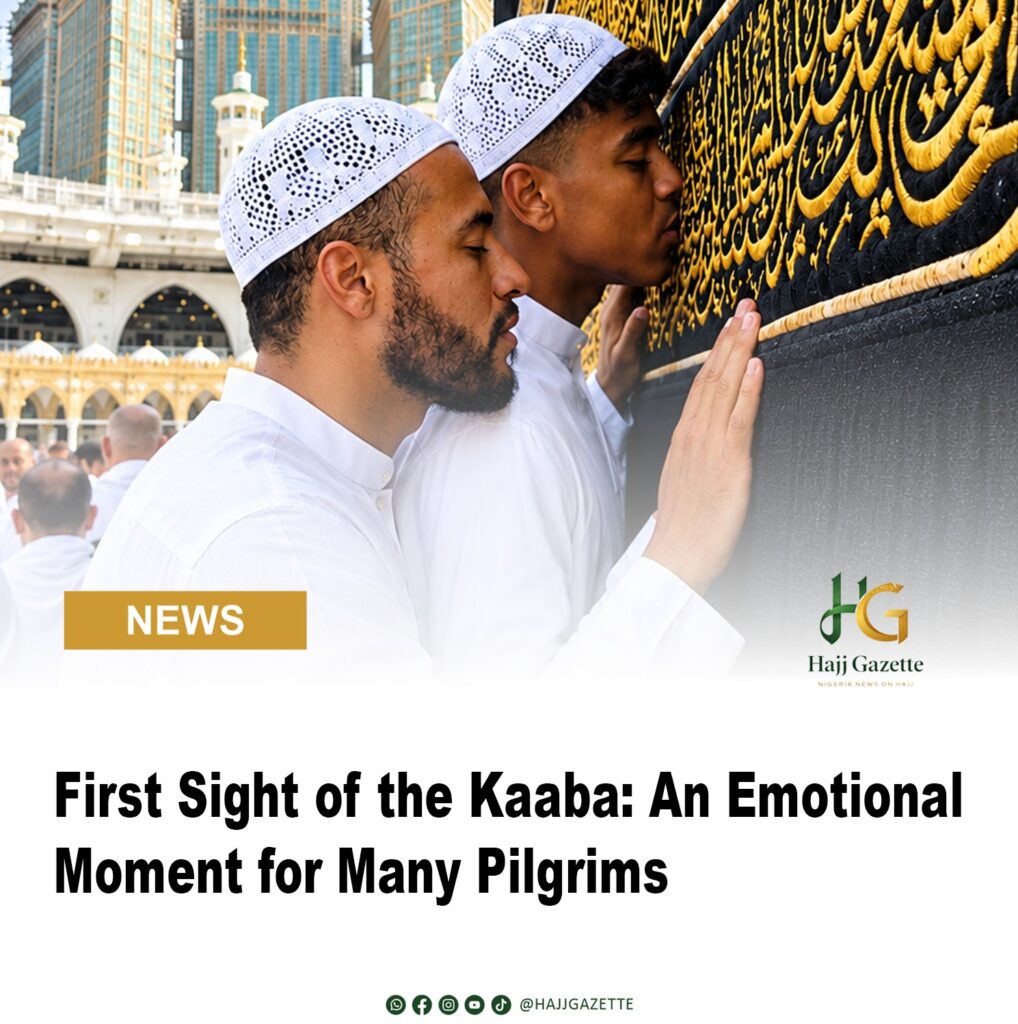
First Sight of the Kaaba: An Emotional Moment for Many Pilgrims
By Khadija Muhammad Umar
For millions of Muslims around the world, seeing the Holy Kaaba for the first time is a deeply emotional experience, marking the fulfilment of a spiritual aspiration nurtured through years of prayers, hope and anticipation.
Located within Masjid al-Haram in Makkah, Saudi Arabia, the Kaaba occupies a central place in Islam.
Muslims across the world turn towards it during their daily prayers, making the opportunity to stand before it a cherished dream for many believers.
When pilgrims finally catch their first glimpse of the sacred structure, emotions can run high. Some shed tears, others raise their hands in supplication, while many stand quietly, overwhelmed by the significance of the moment.
For others, the experience brings a profound sense of gratitude to Almighty Allah for granting them the opportunity to visit Islam’s holiest site.
The reactions differ from one pilgrim to another, reflecting the personal nature of faith and the different journeys that bring Muslims to Makkah.
For some, the moment represents the culmination of years of saving, planning and making sacrifices to undertake Hajj or Umrah.
Others may have grown up listening to family members recount their pilgrimage experiences, watching images of the Kaaba or praying for the opportunity to see it themselves.
First Sight of the Kaaba: An Emotional Moment for Many Pilgrims
Children visiting the Grand Mosque for the first time may also experience a sense of wonder as they encounter in person a sacred place they have previously known through religious teachings, photographs and family discussions.
Beyond the immediate emotions, the experience can provide an opportunity for personal reflection, repentance, gratitude and renewed commitment to faith.
For many pilgrims, the moment becomes a lasting memory associated with their spiritual journey.
The Kaaba also represents a powerful symbol of unity among Muslims. During Hajj and Umrah, pilgrims from different countries, cultures and socioeconomic backgrounds gather at Masjid al-Haram to worship Allah, demonstrating the shared foundations of their faith.
Despite differences in language, nationality and personal circumstances, they face the same direction in prayer and participate in acts of worship that connect Muslims across generations.
The first sight of the Kaaba is therefore more than a memorable moment for many pilgrims. It represents the meeting of a lifelong spiritual longing with the reality of standing before one of Islam’s most sacred sites.
For those who experience it, the memory may endure long after their return home, serving as a reminder of their pilgrimage, their prayers and their connection to Almighty Allah.