

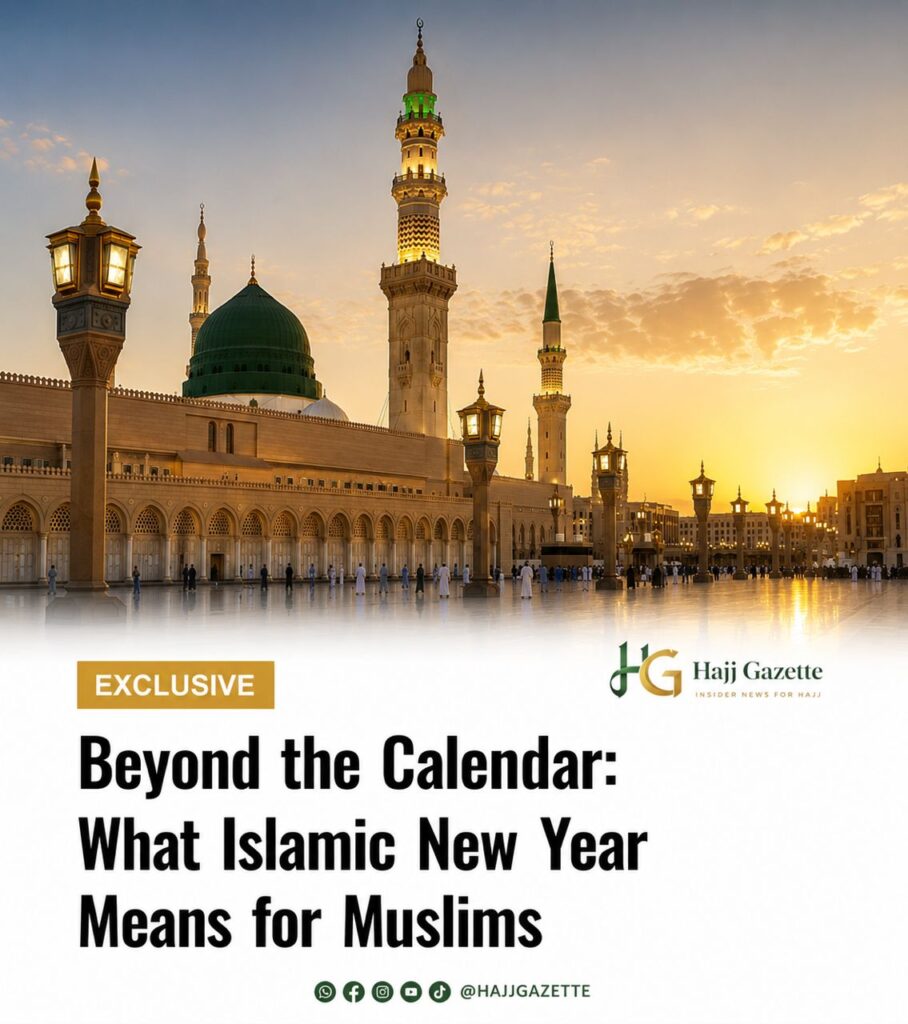
Beyond the Calendar: What Islamic New Year Means for Muslims
By Abdulmumin Aliu
As Muslims around the world welcome the Islamic New Year, the occasion serves as far more than a transition from one date to another.
For believers, it is a time for reflection, spiritual renewal, and recommitment to the values that define the Islamic faith.
Unlike the Gregorian New Year, often associated with celebrations and festivities, the Islamic New Year marks the beginning of Muharram, one of Islam’s four sacred months.
It invites Muslims to pause, examine their relationship with Allah, assess their conduct, and embrace positive change.
The Islamic calendar, known as the Hijri calendar, traces its origin to the historic Hijrah, migration of Prophet Muhammad (peace be upon him) and his companions from Makkah to Madinah in 622 CE.
More than a physical journey, the migration represented sacrifice, perseverance, faith, and the establishment of a community founded on justice and devotion to God.
This year’s observance comes shortly after millions of Muslims completed the annual Hajj pilgrimage in Saudi Arabia, creating a powerful link between two of Islam’s most significant spiritual milestones.
For many Islamic scholars, the transition from Hajj to Muharram symbolizes a continuous journey of faith, sacrifice, and self-improvement.
Speaking on the significance of the occasion, Imam AbdulRazak Aruna of Isami Village in the Auchi Sacred Kingdom said the Islamic New Year carries enduring lessons for Muslims.
“The Hijrah teaches sacrifice, perseverance, and trust in Allah. Prophet Muhammad (peace be upon him) and his companions left behind their homes and possessions to preserve their faith.
Every new Hijri year should inspire Muslims to evaluate their spiritual journey and strengthen their relationship with Allah,” he said.
According to the cleric, Muharram provides an opportunity for believers to reconnect with their Creator, seek forgiveness for past shortcomings, and increase acts of worship.
“Muharram is a month to reconnect with Allah and correct the mistakes of the previous year. It is a period for self-improvement, strengthening family ties, showing kindness to neighbors, and praying for the wellbeing of society,” he added.
Imam Aruna noted that the lessons of Hajj complement the message of the Islamic New Year.
“Hajj demonstrates complete submission to Allah. During the pilgrimage, distinctions of wealth, status, and social class disappear as all pilgrims stand equal before their Allah.
The new Hijri year encourages Muslims to sustain those lessons beyond the pilgrimage season and make spiritual growth a lifelong commitment,” he said.
The cleric also highlighted the significance of Ashura, observed on the tenth day of Muharram.
“Muharram contains the Day of Ashura, one of the most important days in Islamic history. It commemorates the day Allah saved Prophet Musa from Pharaoh.
Fasting on Ashura is highly recommended and serves as an expression of gratitude to Allah,” he explained.
Also speaking on the occasion, Islamic scholar Mallam Nurudeen Sa’ad Musa emphasized that Muharram occupies a special place in Islamic tradition.
“Muharram is one of the sacred months mentioned in the Holy Qur’an. Muslims are encouraged to increase acts of worship, charity, and voluntary fasting during this period.
The beginning of a new Hijri year should inspire positive change, self-evaluation, and greater commitment to moral values,” he said.
He urged Muslims to use the occasion to strengthen family ties, support the less privileged, and contribute positively to their communities.
As Nigeria and the wider Muslim world confront social and economic challenges, religious leaders say the lessons of Hijrah remain relevant.
They argue that faith, patience, sacrifice, and God-consciousness can help individuals navigate difficulties while contributing to peace and national development.
Across the Muslim world, Muslims will welcome Muharram with prayers, sermons, Qur’an recitations, educational programmes, and charitable activities that reinforce the lessons of Hijrah.
For Muslims, therefore, the Islamic New Year is more than a date on a calendar. It is a reminder that every new beginning offers an opportunity for renewal, reflection, and transformation.
The enduring lessons of Hijrah continue to inspire believers to move from faith to action, from sacrifice to reward, and from reflection to meaningful change.