
A Sacred Moment by the Kaaba: Pilgrims’ Guide to Praying at Hijr Ismail
For many Nigerian pilgrims in Makkah, few spiritual moments compare to the opportunity to pray inside Hijr Ismail, also known as the Hateem—a revered semi-circular area beside the Holy Kaaba that once formed part of its original structure.
The significance of this sacred space dates back to the time of the Prophet Muhammad Ṣallallāhu ʿAlayhi Wa Sallam who is reported to have taken Aisha (RA) to the area and explained that praying there carries the same reward as praying inside the Kaaba itself. For pilgrims, this makes stepping into the Hateem a deeply emotional and faith-strengthening experience.
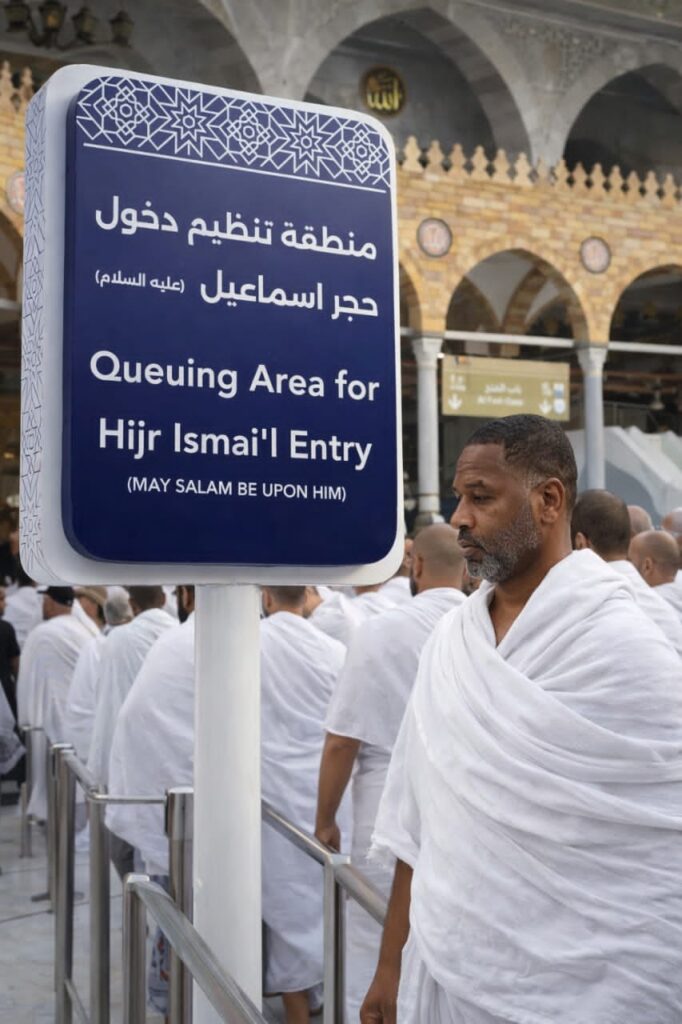
Access to Hijr Ismail is carefully regulated by Saudi authorities to ensure order and fairness among the thousands of worshippers who seek to pray there daily. Pilgrims are usually directed to Gate Al-Fath, located on the western side of the Kaaba, where queues are formed under official supervision.
Specific time slots are allocated to manage the flow of worshippers. Men are generally allowed entry late at night, often between 10:00 p.m. and 2:00 a.m., while women typically have access during the morning hours, usually from 7:00 a.m. to 11:00 a.m. Each pilgrim is permitted only a few minutes inside the sacred enclosure, making patience and early arrival essential.
Once inside, worshippers are advised to enter calmly, locate a clear spot within the low marble wall, and offer two units of prayer or engage in quiet supplication. Many pilgrims come prepared with written or memorised Du’as to ensure they make the most of the brief but spiritually intense moment. After completing their prayers, pilgrims are encouraged to exit gently to allow others the same opportunity.
For Nigerian pilgrims and Muslims from across the world, praying in Hijr Ismail is far more than a ritual—it is often remembered as one of the most profound highlights of their pilgrimage. With proper planning, discipline in the queues, and respect for laid-down guidelines, pilgrims can safely and meaningfully include this blessed experience in their journey to the Holy City of Makkah.