

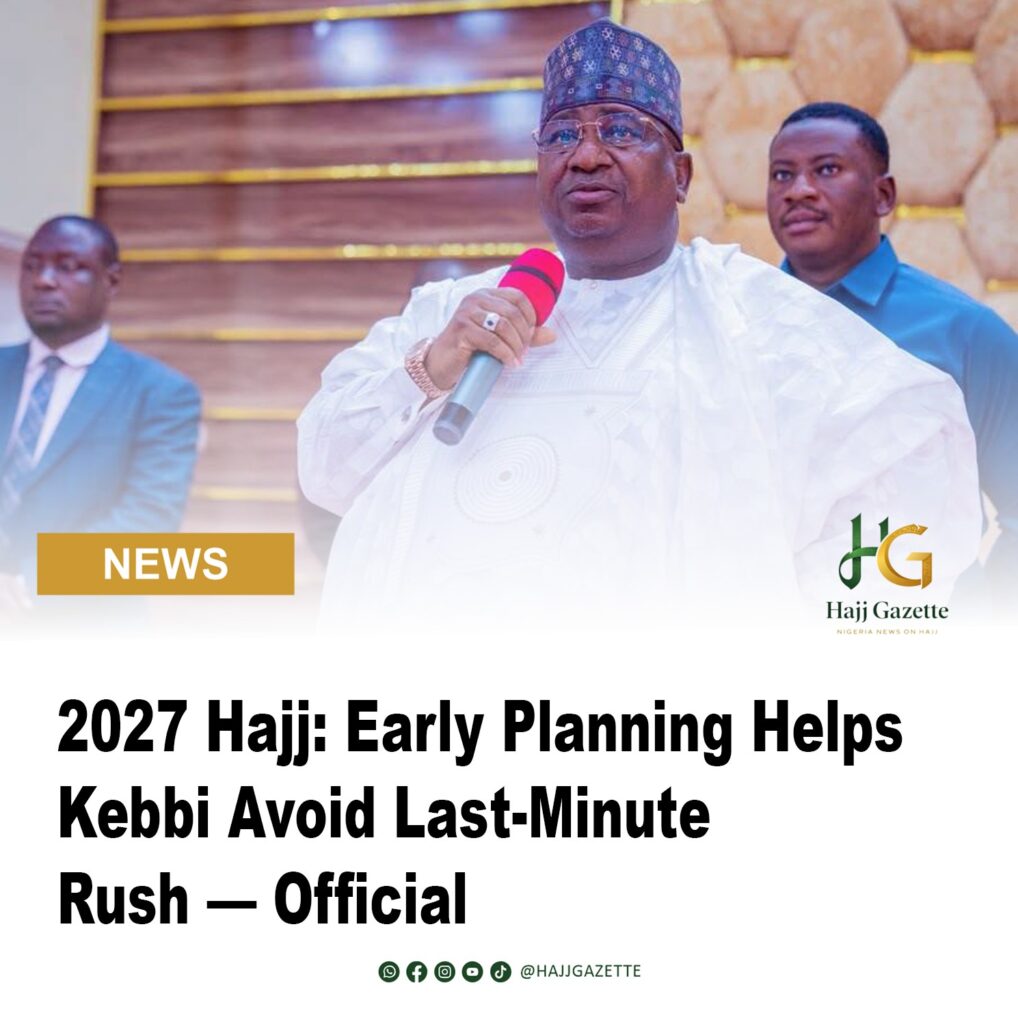
2027 Hajj: Early Planning Helps Kebbi Avoid Last-Minute Rush — Official
By Abdulrazaq Auwal
As the National Hajj Commission of Nigeria (NAHCON) closes its portal for 2027 Hajj registration and passport uploads, the Kebbi State Pilgrims Welfare Agency says it has already exhausted its allocation of more than 3,500 seats and completed all major documentation requirements.
The agency attributed the early completion to sustained sensitisation and preparations that helped it avoid the last-minute rush for Hajj registration, payments and mandatory documentation.
The Director of Da’wah of the Kebbi Pilgrims Welfare Agency, Imam Aminu Hassan, told Hajj Gazette that the state completed the upload of all pilgrims’ passports before NAHCON shut the portal.
“We have fully exhausted our 2027 Hajj allocation of over 3,500 seats. We completed the uploading of all passports before the closure of NAHCON’s portal, and we have also completed other major financial and documentation requirements for the pilgrimage,” Hassan said.
He said early engagement with intending pilgrims enabled the agency to complete the key requirements ahead of the deadline and avoid the pressure associated with late registration and documentation.
2027 Hajj: Early Planning Helps Kebbi Avoid Last-Minute Rush — Official
Hassan said the agency had consistently sensitised intending pilgrims on the requirements and timelines for the 2027 Hajj, allowing them to complete their obligations before the registration window closed.
“Alhamdulillah! We thank God for that,” he said.
The development comes as NAHCON formally closes the registration and passport-upload window for the 2027 Hajj, ending the opportunity for states and intending pilgrims to complete those requirements through the commission’s portal.
With Kebbi’s allocation fully exhausted and its major financial and documentation requirements completed, the agency is expected to concentrate on subsequent preparations, including pilgrim enlightenment, religious guidance and operational coordination.
Kebbi’s experience highlights the importance of early registration and sustained pilgrim sensitisation as Nigerian states work to meet increasingly time-bound requirements for the 2027 Hajj.
For states yet to complete their processes, the portal closure marks a critical point in the 2027 Hajj preparation calendar, with attention now shifting from registration and documentation to the next phase of operational planning.