

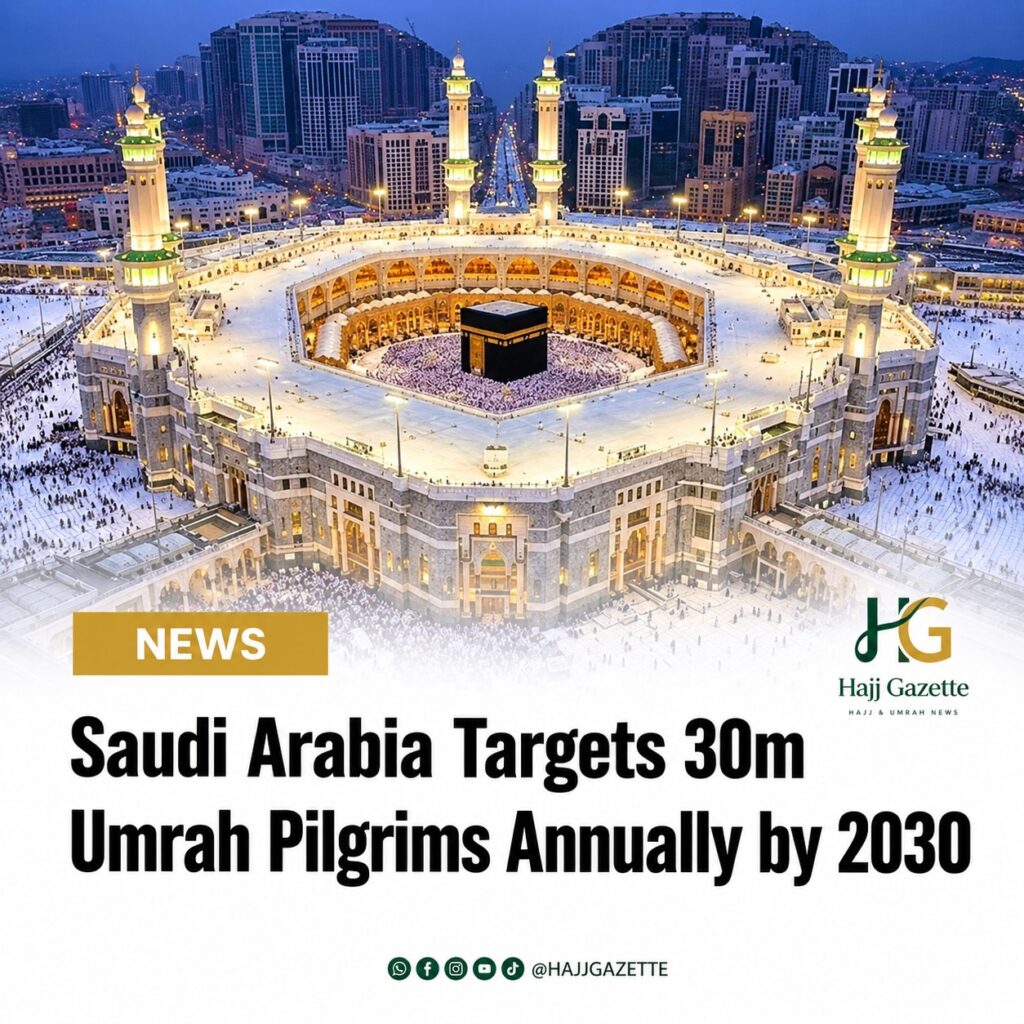
Saudi Arabia Targets 30m Umrah Pilgrims Annually by 2030
By Abdulrazaq Auwal
Saudi Arabia is targeting 30 million Umrah pilgrims annually by 2030 as part of its Vision 2030 programme, with the Kingdom accelerating investments in infrastructure, digital services and pilgrim facilities to accommodate rising international demand.
The ambitious target represents a major expansion of the Kingdom’s pilgrimage capacity and forms part of efforts to improve the overall experience of visitors to Makkah and Madinah.
According to Saudi Vision 2030 data, the Kingdom recorded 16.92 million foreign Umrah pilgrims in 2024, exceeding the 11.3 million target set for the year.
The performance places Saudi Arabia more than halfway towards its 2030 ambition and highlights the rapid growth of international Umrah travel following the expansion of visa access and the digitisation of pilgrimage services.
The Kingdom’s strategy covers the entire pilgrim journey, from visa application and arrival to transportation, accommodation, worship and departure.
Digitalisation has become a major component of the transformation, with electronic visa services and the Nusuk platform increasingly connecting pilgrims with official services and pilgrimage-related arrangements.
Saudi Arabia Targets 30m Umrah Pilgrims Annually by 2030
Saudi Arabia is also expanding infrastructure in the two holy cities, including facilities around the Grand Mosque in Makkah and the Prophet’s Mosque in Madinah, while strengthening transportation networks linking airports, hotels and religious sites.
The Haramain High-Speed Railway has further improved connectivity between Makkah and Madinah through key locations, while other transport and urban development projects are aimed at easing movement during peak pilgrimage periods.
The 30-million target also carries significant economic implications for Saudi Arabia, particularly in hospitality, transportation, retail, food services, telecommunications and other sectors associated with pilgrim spending.
However, achieving the target will require continued investment in accommodation, healthcare, crowd management, water supply, waste management and public safety.
For Nigerian pilgrims, the transformation is likely to increase the importance of digital registration, official visa channels and approved service providers.
As Saudi Arabia moves towards 2030, the central challenge will be to expand capacity without compromising safety, service quality and the spiritual character of the pilgrimage experience.