

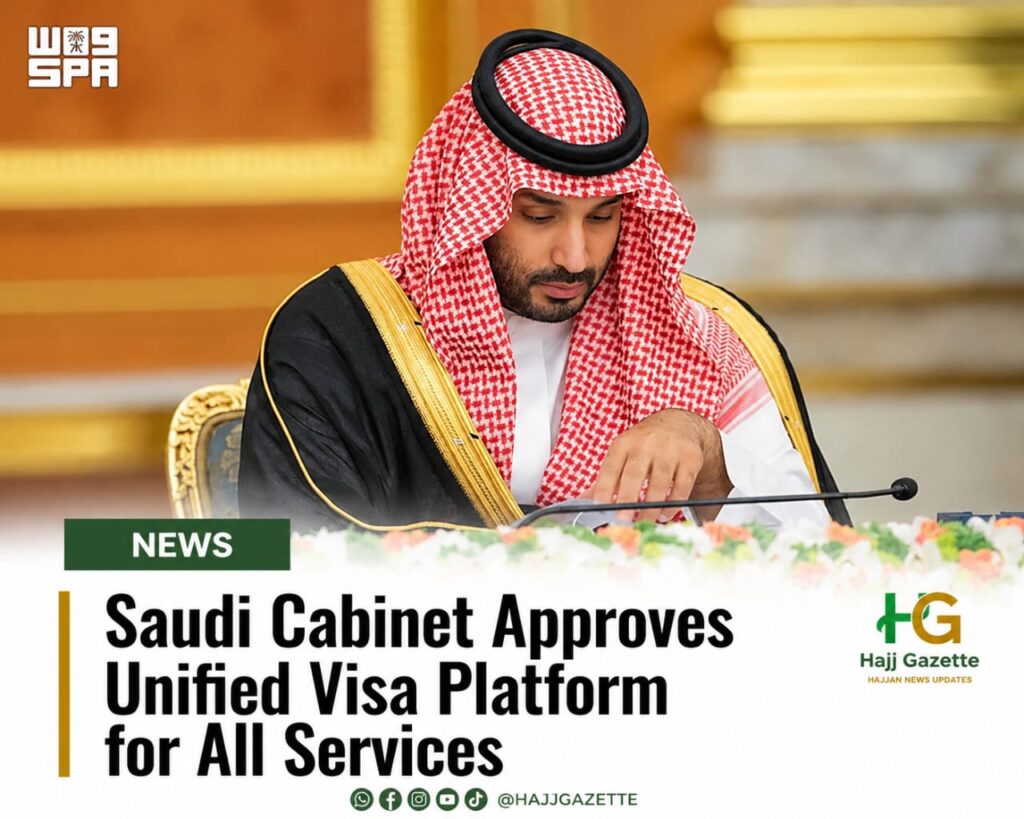
Saudi Cabinet Approves Unified Visa Platform for All Services
By Abdulrazaq Auwal
Saudi Arabia’s Cabinet has approved the establishment of a unified national visa platform under the Ministry of Foreign Affairs, marking a major step toward streamlining and centralizing all visa services in the Kingdom.
The decision was reached during a Cabinet meeting chaired by Crown Prince and Prime Minister Mohammed bin Salman in Jeddah on Tuesday, as part of broader efforts to strengthen Saudi Arabia’s digital transformation and improve government service delivery.
The new platform will serve as the Kingdom’s official gateway for visa-related services, reinforcing the government’s commitment to building a more efficient and integrated digital ecosystem for residents, visitors and international travellers.
The Cabinet also endorsed visa exemption agreements with Hungary, Kazakhstan and Poland for holders of diplomatic, service and special passports, a move expected to deepen diplomatic cooperation and facilitate official travel between the countries.
Briefing journalists after the meeting, Minister of Media Salman Al Dosari said the Cabinet reviewed the Kingdom’s recent international engagements, including initiatives aimed at strengthening relations with friendly nations and enhancing global coordination to promote peace and security.
Saudi Cabinet Approves Unified Visa Platform for All Services
The ministers commended Saudi Arabia’s participation in the United Nations Counter-Terrorism Week, reaffirming the Kingdom’s commitment to combating terrorism, eliminating its root causes and disrupting sources of extremist financing.
The Cabinet also welcomed the unanimous adoption by the UN Human Rights Council of a Saudi-led resolution on empowering women in cybersecurity, expanding on a global initiative launched by Crown Prince Mohammed bin Salman.
Highlighting the Kingdom’s digital progress, the Cabinet noted Saudi Arabia’s first-place global ranking in the 2026 ICT Development Index, attributing the achievement to continued investment in digital infrastructure, regulatory reforms and the rapid expansion of the region’s largest digital economy.
On domestic affairs, ministers praised the nonprofit sector’s continued growth, with more than 7,200 organizations and 1.7 million volunteers recorded by the end of 2025.
The Cabinet also approved several cooperation agreements with Singapore, Turkey, Spain and Oman across social development, justice, transport and museum sectors.