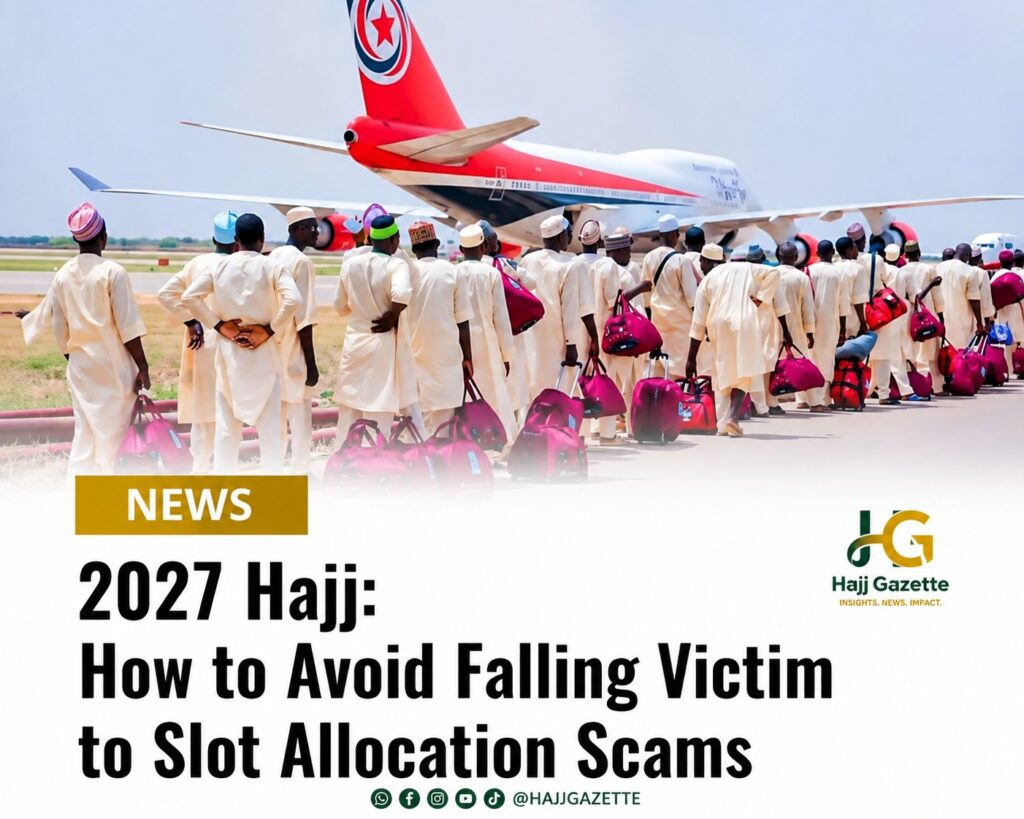
2027 Hajj: How to Avoid Falling Victim to Slot Allocation Scams
By Abdulrazaq Auwal
As preparations for the 2027 Hajj gather pace, the National Hajj Commission of Nigeria (NAHCON) has warned intending pilgrims and Tour Operators against fraudsters demanding money with promises of securing guaranteed or special Hajj slots.
In a public notice dated August 15, 2026, NAHCON said some individuals claiming to be its agents or staff had contacted Tour Operators and intending pilgrims, requesting various sums in exchange for guaranteed allocations.
The Commission made it clear that no individual, agent, Tour Operator or other person has the authority to collect a facilitation fee or additional payment to guarantee, facilitate or secure a special Hajj slot.
For intending pilgrims, the warning carries a simple message: do not pay anyone who claims that money can buy preferential access to a Hajj allocation.
NAHCON said slot allocation remains subject to approved procedures and its guidelines for licensed Tour Operators.
Pilgrims should therefore make payments only through officially designated channels, including State Pilgrims Welfare Agencies, designated Hajj Savings Banks and duly licensed Tour Operators.
2027 Hajj: How to Avoid Falling Victim to Slot Allocation Scams
One major red flag is a demand for payment into a personal account or an offer made through an unofficial WhatsApp or social media contact.
Pilgrims should independently verify the identity and status of anyone requesting payment before transferring funds.
Another warning sign is pressure to pay immediately to avoid losing a supposedly reserved slot. Fraudsters often exploit urgency, secrecy and fear to prevent victims from conducting proper verification.
Pilgrims should also insist on official payment documentation and keep receipts and transaction records for every payment made towards the pilgrimage.
NAHCON further warned that failure to meet the September 26, 2026 deadline for pilgrims’ data upload and the December 2, 2026 deadline for complete remittance of payments could lead to forfeiture of allocated slots. No unofficial agent can lawfully override these deadlines.
The Commission urged anyone who receives an unsolicited demand for money in connection with Hajj slot allocation to report the matter to the police or other relevant law-enforcement authorities.
For intending pilgrims, the safest rule remains straightforward: stop, verify and pay only through authorised channels.