

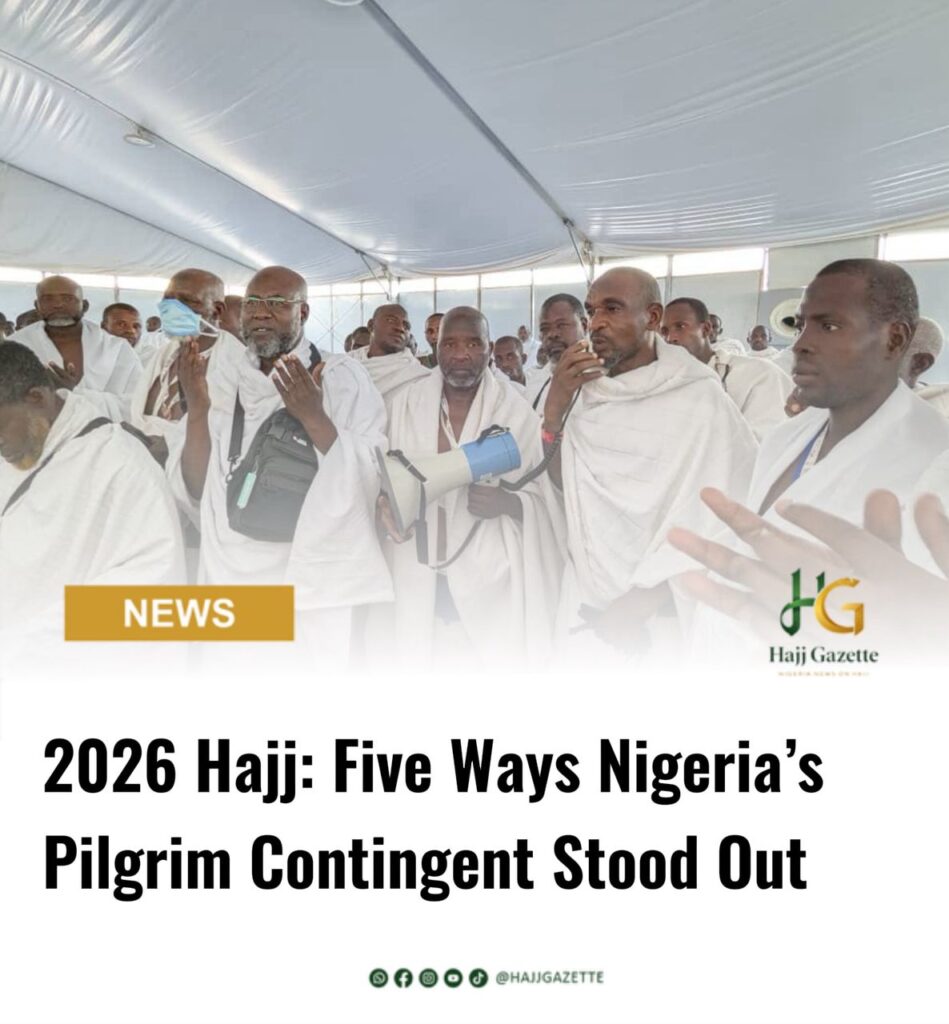
2026 Hajj: Five Ways Nigeria’s Pilgrim Contingent Stood Out
By Abdulrazaq Auwal
Nigeria’s 2026 Hajj contingent distinguished itself through a combination of extensive healthcare delivery, digital innovation, enhanced crowd management, state-backed welfare initiatives, and coordinated spiritual engagement, making it one of the most notable national delegations during this year’s pilgrimage in Saudi Arabia.
One of the most remarkable aspects of Nigeria’s participation was the scale of medical services provided to pilgrims.
With temperatures soaring above 47 degrees Celsius during parts of the pilgrimage, the National Hajj Commission of Nigeria (NAHCON) deployed a comprehensive healthcare network comprising five licensed clinics in Makkah and Madinah.
The commission’s medical team, made up of 287 healthcare professionals, attended to at least 15,083 Nigerian pilgrims during the Hajj season.
The figure highlights both the health challenges associated with the pilgrimage and the importance of Nigeria’s medical preparedness in safeguarding pilgrims’ wellbeing.
The 2026 Hajj also witnessed the implementation of a structured crowd-management strategy aimed at reducing incidents of missing pilgrims.
Under the system, pilgrims were organized into fixed groups of 45 persons, enabling officials to monitor movements more effectively and provide faster assistance when required.
The initiative improved accountability, strengthened welfare supervision, and enhanced coordination during movements between the holy sites.
Nigeria’s Hajj operation recorded significant progress in digital administration through closer integration with Saudi Arabia’s Nusuk platform.
Pilgrim records, transportation arrangements, accommodation services, and movement schedules were increasingly linked to the Nusuk smart card system, helping to streamline service delivery and improve verification processes.
The adoption of digital tools also strengthened efforts to curb administrative irregularities while ensuring that pilgrims could access authorized services more efficiently.
A defining feature of the 2026 Hajj exercise was the extensive involvement of state governments in supporting their pilgrims beyond the standard arrangements.
Several states introduced welfare packages, financial assistance programs, and special interventions to ease the burden on pilgrims during their stay in the Kingdom.
Sokoto and Kebbi States provided one of the most significant interventions by approving a Sallah package for its pilgrims in Saudi Arabia.
Kaduna State attracted attention after Governor Uba Sani personally visited pilgrims in Mina and distributed financial support to assist them with expenses.
Kano State approved a multimillion-naira support package that translated into cash assistance for its pilgrims, while Katsina State covered the cost of Hadaya and provided additional welfare support.
Bauchi, Plateau, Lagos, Niger, Borno, Yobe, Jigawa, Zamfara, Gombe and several other states also introduced various forms of assistance, ranging from logistical support and welfare packages to enhanced pilgrim monitoring and service coordination.
The widespread commitment by state governments underscored the importance attached to pilgrim welfare and became one of the most distinctive features of Nigeria’s 2026 Hajj operation.
Beyond logistics and welfare, Nigeria’s delegation demonstrated a strong commitment to national development through coordinated prayers led by members of the NAHCON Ulama team.
During the Day of Arafat, clerics led special supplications for Nigeria’s peace, unity, security, economic progress, and democratic stability.
The initiative reflected the delegation’s vision of using the spiritual significance of Hajj to seek divine guidance and blessings for the nation.
Taken together, these initiatives showcased Nigeria’s evolving approach to Hajj administration. From healthcare and technology to welfare support and spiritual leadership.
The 2026 Hajj season highlighted efforts by NAHCON, state pilgrim boards, and government officials to improve the overall pilgrimage experience for thousands of Nigerian Muslims.
The combination of operational reforms, medical preparedness, digital innovation, and unprecedented welfare interventions ensured that Nigeria’s contingent stood out among many of the delegations that participated in the 2026 Hajj.