

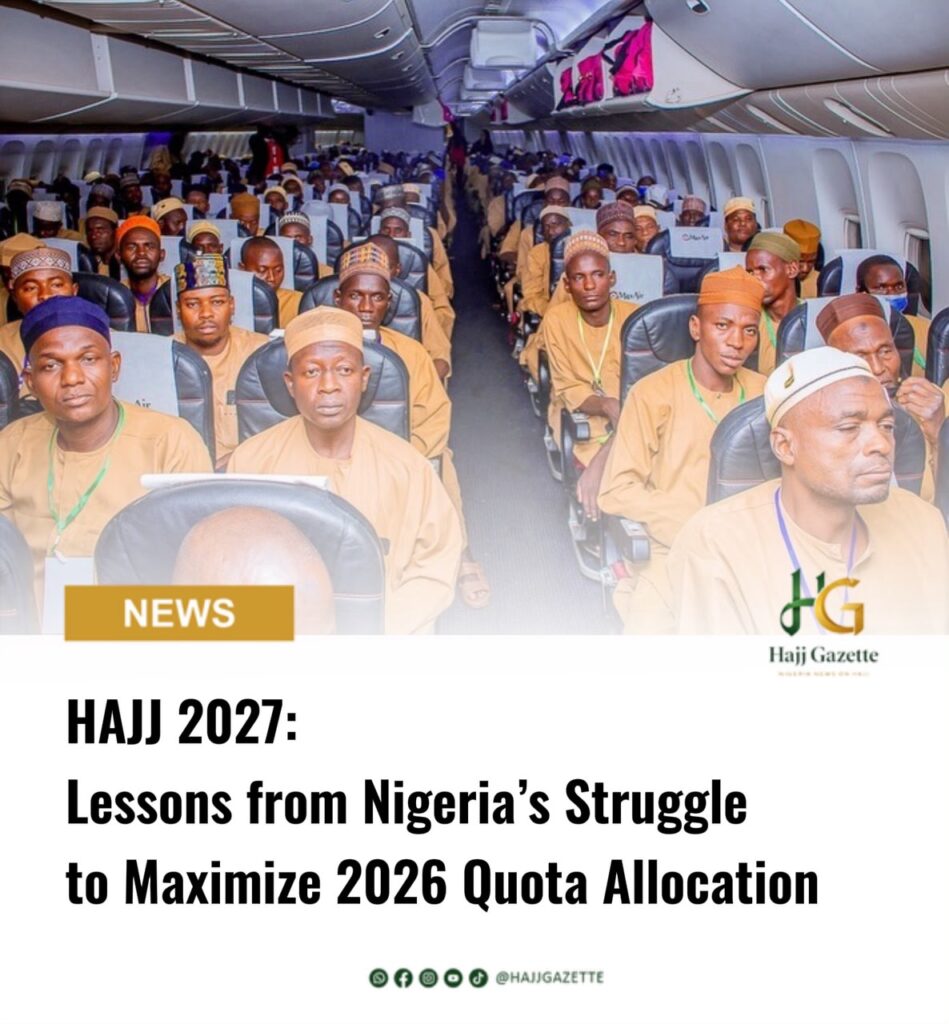
Lessons from Nigeria’s Struggle to Maximize 2026 Hajj Quota Allocation
By Khadija Muhammad Zakari
As preparations begin for the 2027 Hajj, stakeholders in Nigeria’s pilgrimage industry are reflecting on key lessons from the 2026 exercise, particularly the challenge of maximizing the country’s allocated pilgrim quota despite high demand.
Nigeria was allocated 50,000 slots for the 2026 Hajj, a figure that initially sparked concerns among intending pilgrims and state pilgrims’ welfare boards over the adequacy of available spaces.
However, developments during the registration period revealed a different challenge as many prospective pilgrims were unable to complete payments before the deadline set by Saudi authorities.
Observers in the industry noted that the payment deadline came earlier than the period in which many Nigerian pilgrims traditionally finalize their Hajj deposits.
The shortened timeline reportedly affected registrations across several states, leaving a significant number of intending pilgrims unable to secure places for the pilgrimage.
The development highlighted the growing impact of changes in Saudi Arabia’s Hajj management system, which increasingly requires participating countries to complete payments, accommodation bookings and other logistical arrangements much earlier than in previous years.
Experts say the experience offers valuable lessons for the 2027 Hajj exercise. They argue that early awareness campaigns, prompt opening of registration portals and stronger public enlightenment efforts will be necessary to ensure intending pilgrims understand the importance of making payments well ahead of official deadlines.
Stakeholders have also called for greater coordination between Hajj administrators, state pilgrims’ welfare boards and financial institutions to facilitate easier payment processes and reduce delays.
Some observers further suggest the introduction of structured installment payment plans and earlier mobilization of intending pilgrims to improve compliance with future deadlines.
With Saudi Arabia expected to maintain its policy of early planning and advance payments, analysts believe Nigeria’s ability to adapt to the new system will play a crucial role in determining how effectively it utilizes its Hajj allocation in 2027 and beyond.