

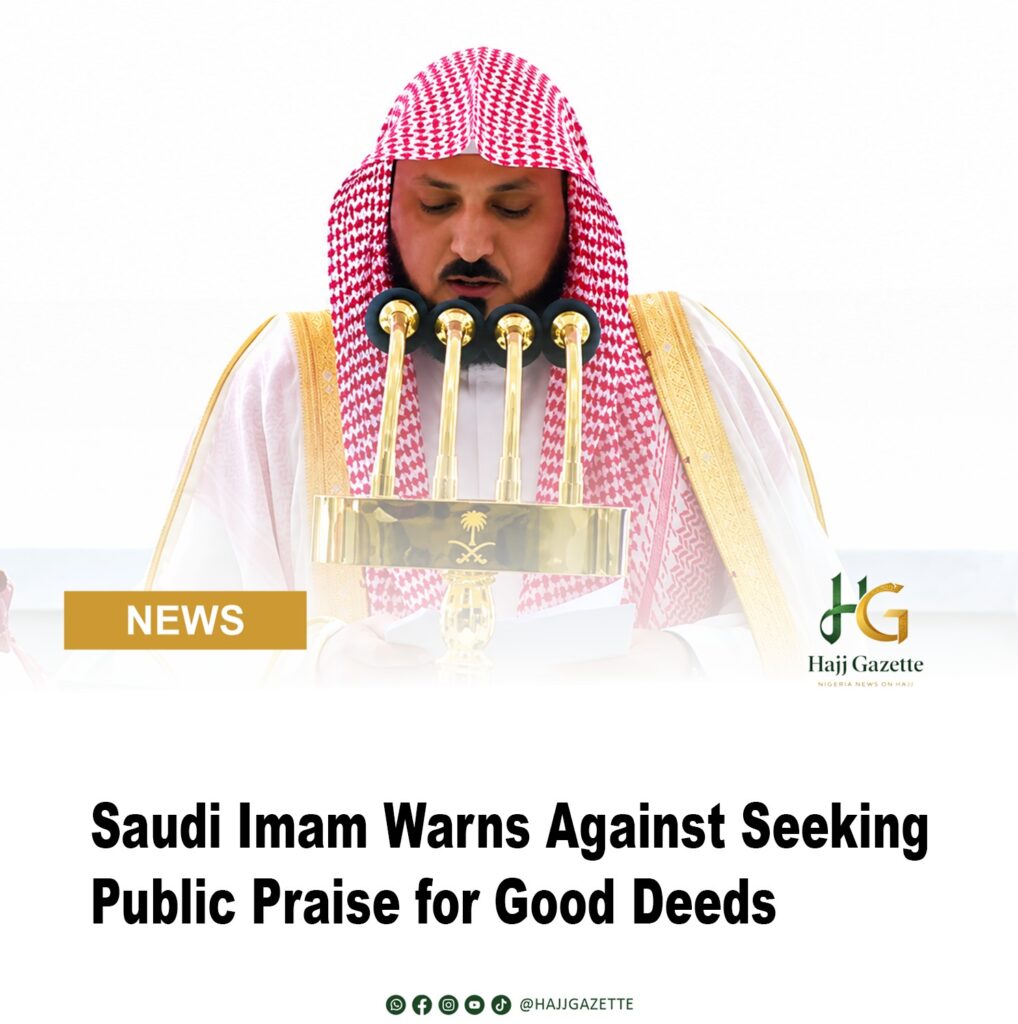
Saudi Imam Warns Against Seeking Public Praise for Good Deeds
By Abdulrazaq Auwal
The Imam of the Grand Mosque in Makkah, Sheikh Maher al-Muaiqly, has warned Muslims against performing good deeds to gain public recognition or praise, urging believers to maintain sincerity and seek reward from Allah alone.
Al-Muaiqly gave the warning during his Friday sermon at Masjid al-Haram, where he called on worshippers to fear Allah and purify their intentions in both words and actions.
He stressed that sincerity of intention (niyyah), determines the spiritual value of an action, distinguishing deeds performed for Allah’s pleasure from those driven by the desire for public approval.
The Imam cautioned against using charitable activities and other good deeds as opportunities to seek validation or admiration from people rather than divine reward.
Al-Muaiqly also explained that sincere intentions can transform ordinary, permissible daily activities into acts of worship that attract rewards from Allah.
He highlighted the Islamic concept of ihtisab, which involves performing good deeds while seeking divine reward, noting that worship extends beyond formal religious obligations such as prayer and fasting.
Saudi Imam Warns Against Seeking Public Praise for Good Deeds
According to him, everyday activities, including providing for one’s family, speaking kindly, maintaining good relationships and helping loved ones, can become rewarding acts when undertaken with sincere intentions.
To illustrate the importance of selflessness, the Imam recalled the example of the Ansar, the people of Madinah who welcomed and supported Prophet Muhammad (S.A.W.) and his companions, placing the needs of their guests above their own despite their limited resources.
The sermon also addressed Muslims experiencing hardship, illness and emotional distress.
Al-Muaiqly said physical exhaustion, sickness, anxiety and other trials endured with patience could serve as means of expiating sins.
He encouraged believers facing difficult circumstances to maintain good expectations of Allah, remain patient and take practical steps towards overcoming their challenges, while remembering that the rewards of the Hereafter are everlasting.
The sermon concluded with prayers for the safety, protection and stability of the region and the wider Muslim community.
The Imam’s message underscored the importance of sincerity in religious and everyday activities, reminding Muslims that the value of good deeds lies not in the recognition they attract from people but in the intentions behind them and the reward sought from Allah.