

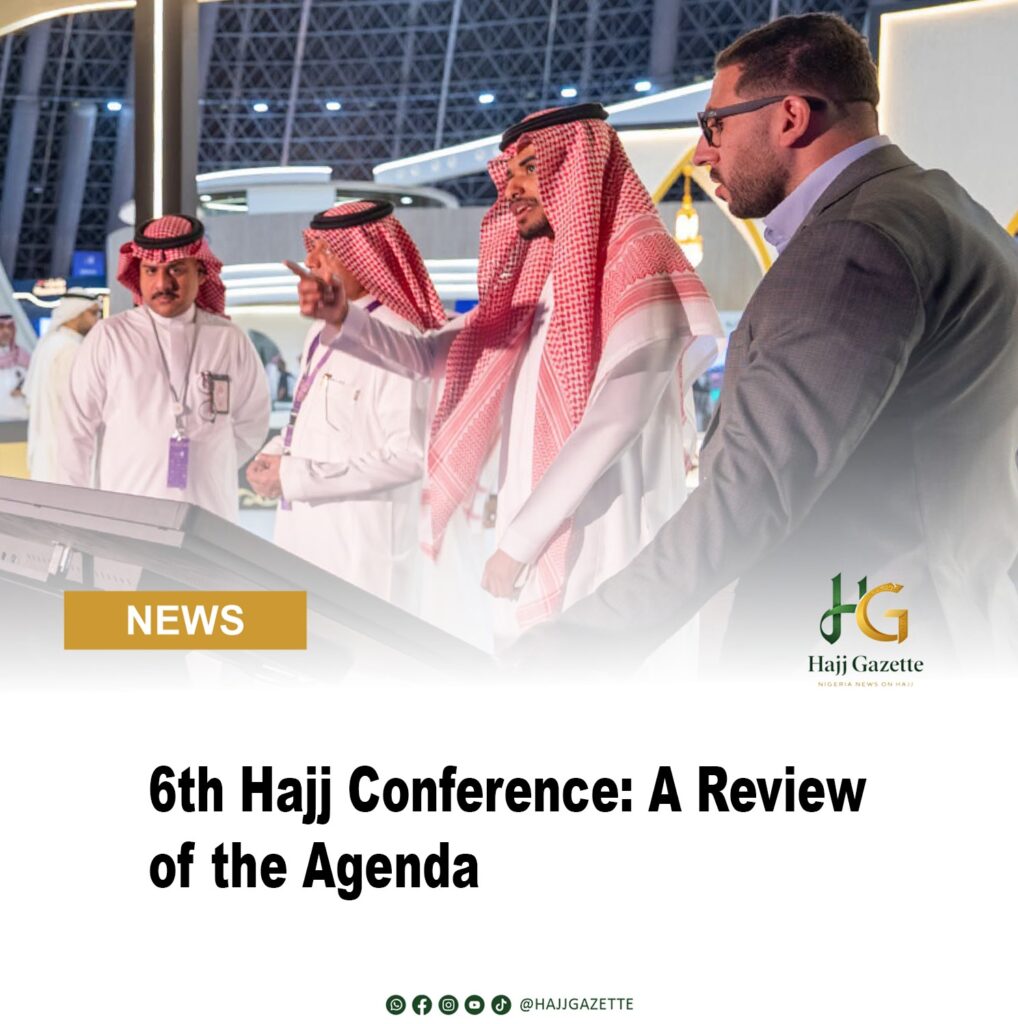
6th Hajj Conference: A Review of the Agenda
By Abdulrazaq Auwal
The Sixth Hajj Conference and Exhibition 2026 has commenced in Jeddah, Saudi Arabia, bringing together stakeholders in the global Hajj sector to examine developments in pilgrimage management, technological innovation, infrastructure and services for pilgrims.
A review of the conference agenda shows that participants will discuss a wide range of issues, including artificial intelligence, digital technology, transportation, healthcare, sustainability and institutional development, as organisers seek to improve the overall experience of pilgrims.
The programme features three major conference tracks: Empowerment and Integration, Infrastructure and Operational Services, and Development and Sustainability.
It also comprises 37 conference sessions, 59 workshops and 32 sessions under the Hajj Council programme, highlighting the breadth of issues lined up for consideration during the event.
Among the prominent subjects on the agenda is the application of artificial intelligence in Hajj operations, particularly in decision-making and crowd management.
One of the scheduled sessions focuses on Basir, an artificial intelligence platform for crowd management, while other discussions will examine wearable technologies, smart maps, virtual reality and holographic awareness systems.
Transportation and logistics also feature prominently, with sessions covering Jeddah Airports as a gateway for pilgrims, land transportation, specialised Hajj logistics, major transportation projects and communication services through eSIM technology.
On pilgrims’ welfare, the programme includes discussions on preventive healthcare, cardiac care technologies, hospitality, digital payments and the protection of pilgrims’ personal data.
6th Hajj Conference: A Review of the Agenda
Other subjects include sustainable waste management, urban agriculture and food security, highlighting the importance of environmental sustainability and efficient resource management in serving pilgrims.
The agenda also addresses institutional development and partnerships within the Hajj sector, with sessions focusing on Hajj management offices, service delivery, the role of the non-profit sector, entrepreneurship and the Guests of Allah Services Programme.
Several Saudi institutions and organisations, including the Ministry of Hajj and Umrah, the Saudi Data and Artificial Intelligence Authority (SDAIA) and Jeddah Airports, are featured in the programme.
For countries participating in the annual pilgrimage, including Nigeria, the discussions provide an opportunity to follow emerging approaches to Hajj administration, service delivery and the management of international pilgrims.
Overall, the agenda reflects an increasingly technology-driven approach to Hajj management, with emphasis on integrating digital solutions, strengthening infrastructure, improving institutional coordination and developing sustainable services for the growing number of pilgrims.
As the conference gets underway, attention will be on how the scheduled discussions translate into practical solutions and partnerships capable of improving the Hajj experience.